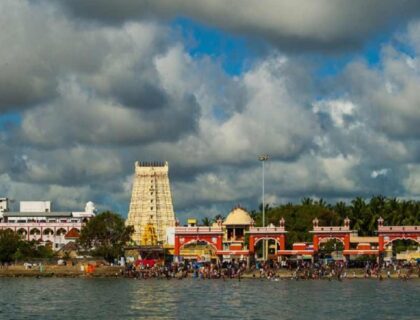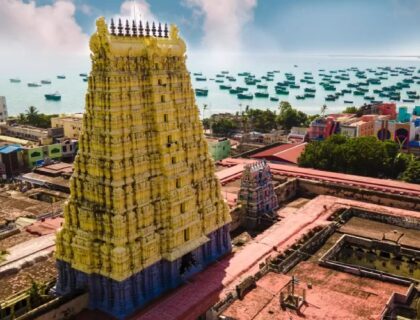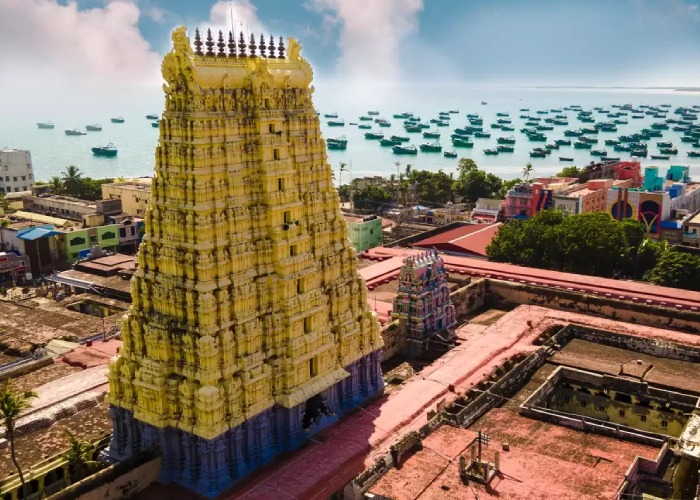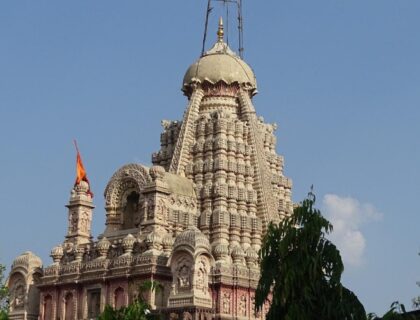

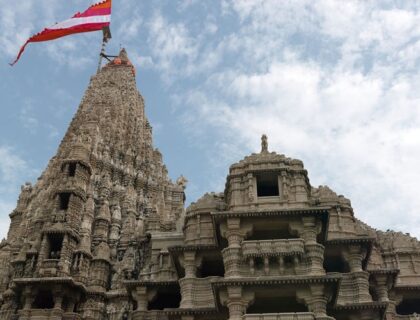
Dwarkadhish Temple Dwarka
Explore Blog

Share

Dwarkadhish Temple Dwarka

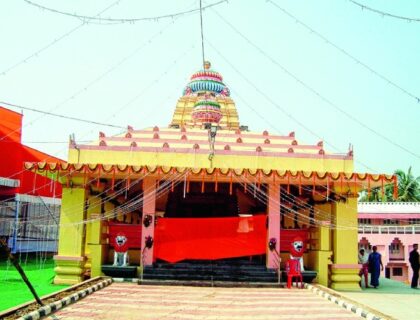
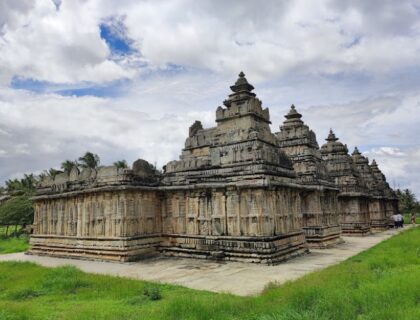
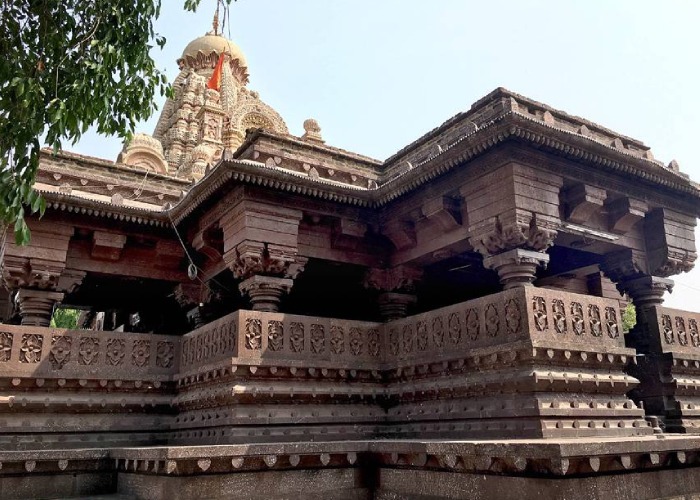
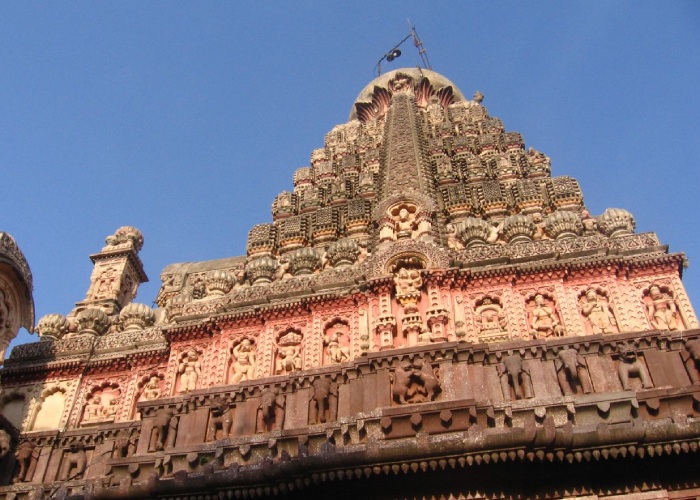
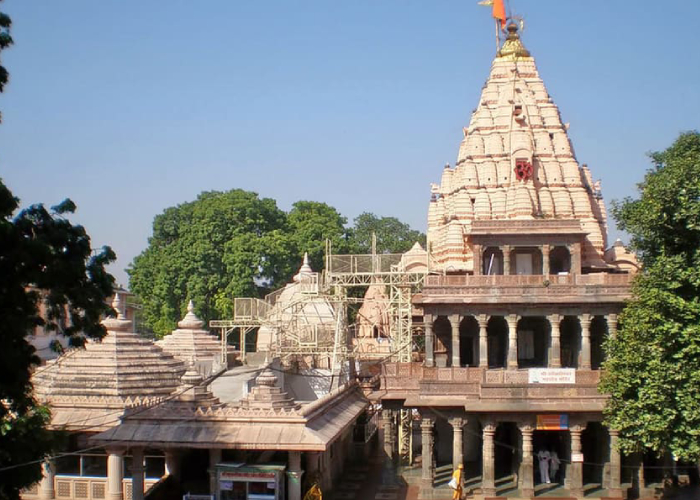
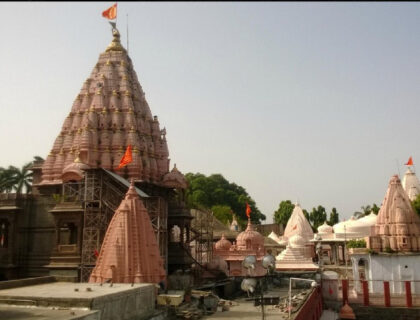
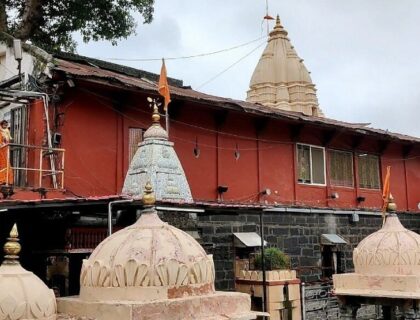
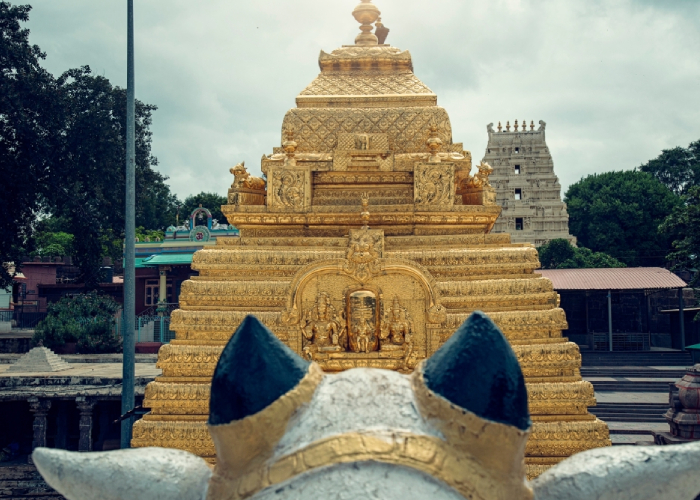
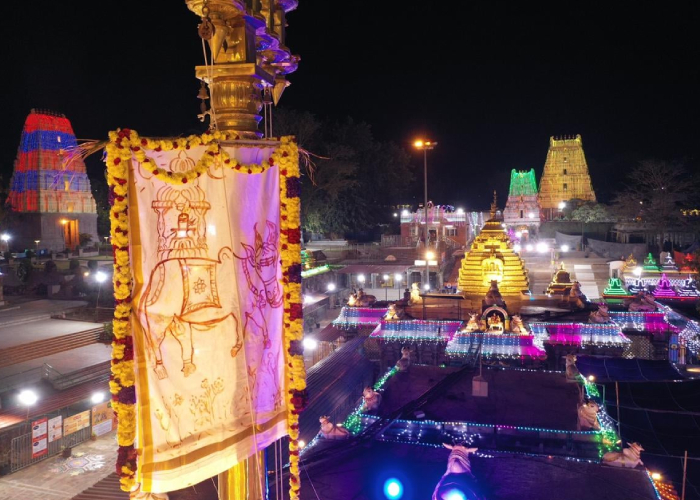
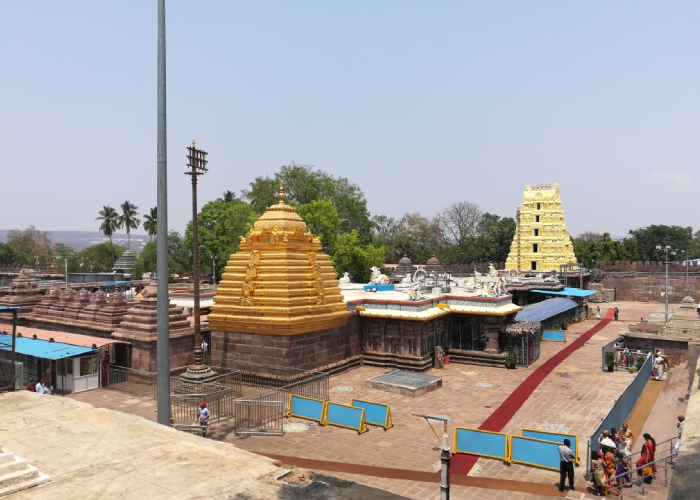
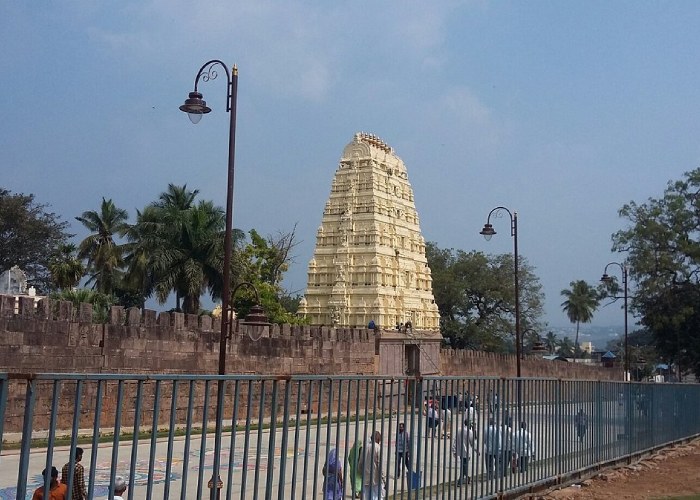
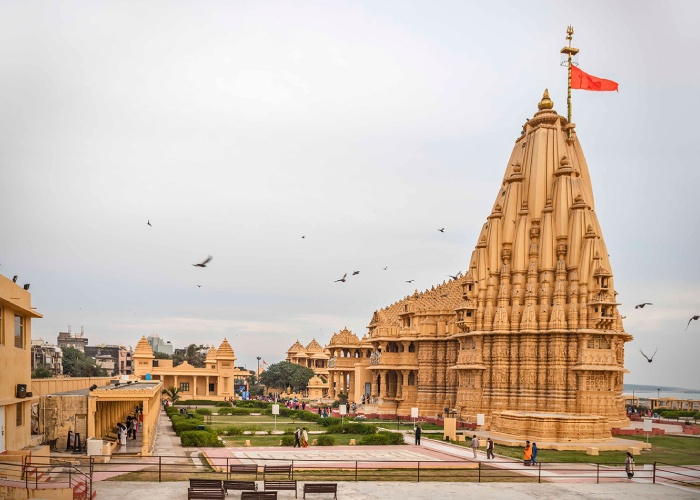
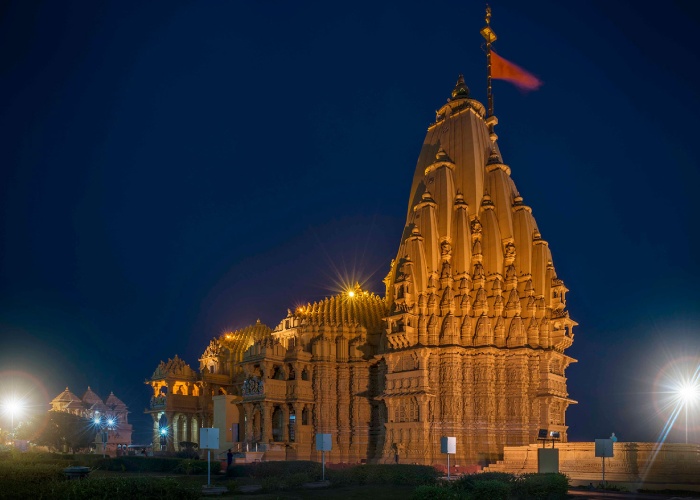
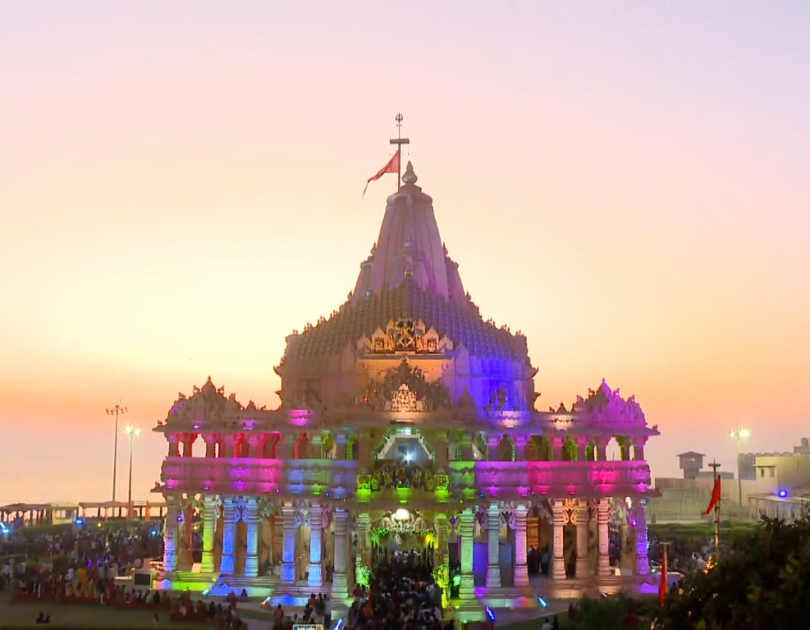
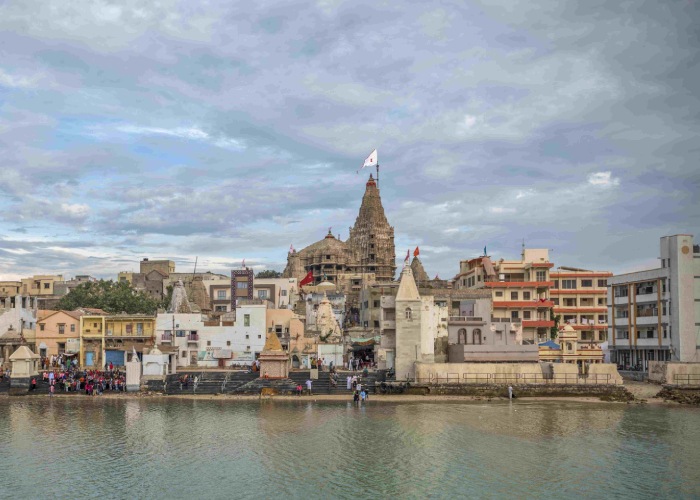
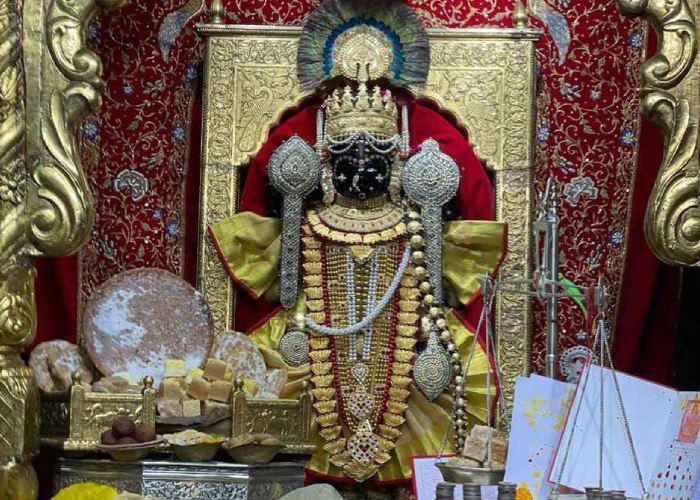
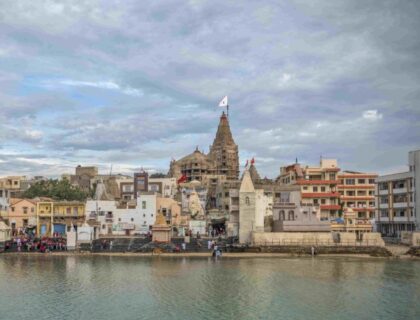
Dwarkadhish Temple Dwarka, also known as the Jagat Mandir Dwarakadheesh is a Hindu temple that is devoted to Lord Krishna located in Dwarka City Of Gujrat. The Dwarkadhish Temple (Jagat Mandir) is believed to have been built more than 5,000 years ago by Lord Krishna’s great-grandson, Vajranabh. It is a destination along the Hindu pilgrimage circuit known as the Char Dham.

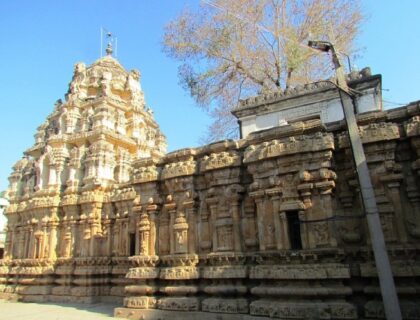
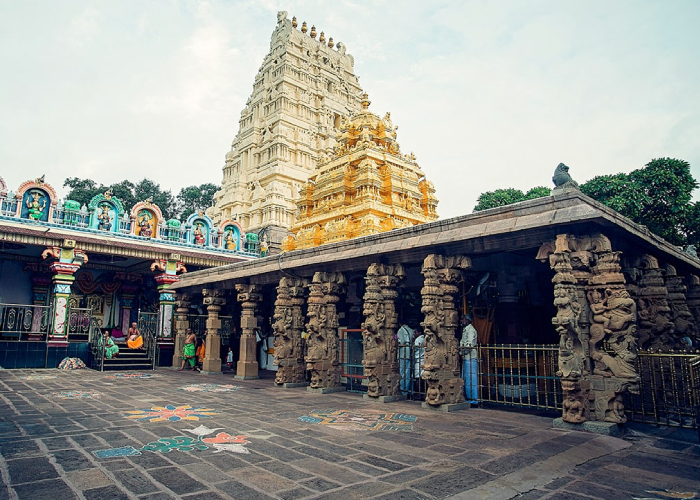
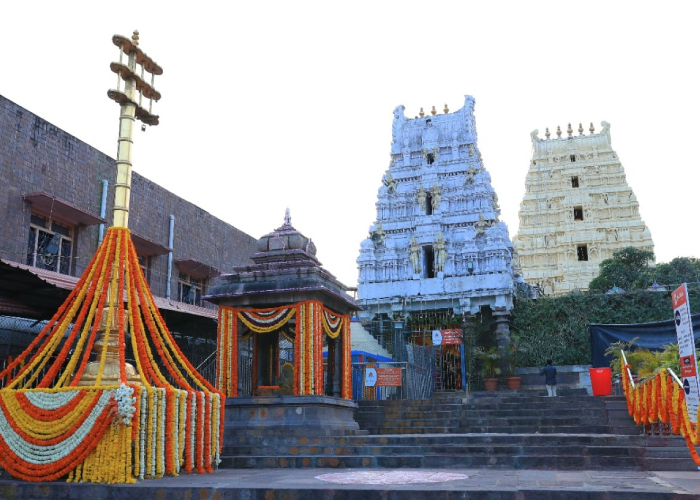
The ancient temple has been renovated several times, most notably in the 16th and 19th centuries. The temple is built on a small hill accessed by more than 50 steps, with heavily sculpted walls that surround the sanctum, which houses the main Krishna idol.

Story Behind Dwarkadhish Temple Dwarka

According to Hindu legend, Dwarka was founded on a land parcel recovered from the ocean by Lord Krishna. Krishna and his wife Rukmini were once visited by Sage Durvasa. The wise man Durvasa wished they’d come with him to their palace to lord Krishna. The couple readily agreed and began following the sage to their palace. Rukmini was thirsty after a long journey, so she asked Krishna for some water. Krishna dug a hole to bring the Ganga River. Sage Durvasa, enraged, cursed Rukmini to remain there. Rukmini is said to have stood in the temple that houses her shrine.

Dwarkadhish Temple Dwarka

History of Dwarkadhish Temple Dwarka

The Dwaraka Kingdom is mentioned in the Mahabharata epic in reference to the centuries-old Gujarati town of Dwarka. The town is located on the Gomti River and is said to have been Krishna’s capital. An examination of anchors discovered on the site, as well as evidence such as a stone block with the script, the way the stones were dressed, and evidence of the use of dowels, indicate that the harbour site dates only to historical times, with some of the underwater structure dating from the late Middle Ages. The ancient port’s demise was most likely caused by coastal erosion.

Hindus believe that Vajranabh, the great-grandson of Krishna, built the original temple on top of Krishna’s residence palace. In 1472, Invader Mahmud Begada destroyed the temple, After which it was reconstructed by Hindu Rulers.

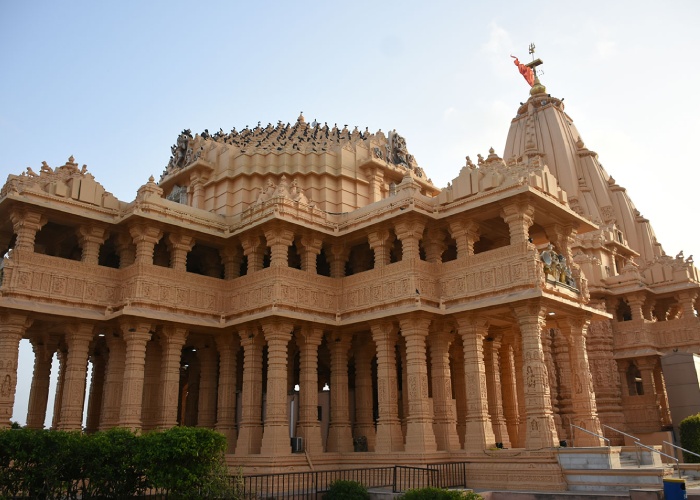
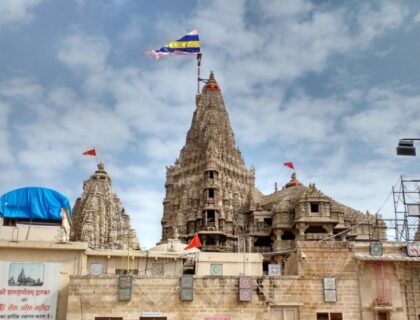
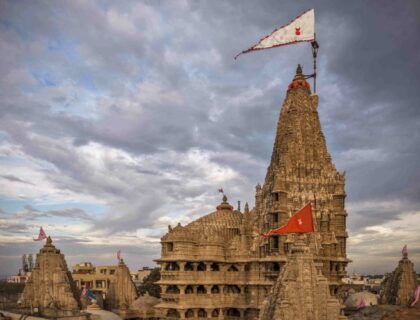
The current Chaulukya-style sanctuary was built between the 15th and 16th centuries. The sanctuary is 27 metres by 21 metres in size, with an east-west length of 29 metres and a north-south width of 23 metres. The temple’s highest point stands at 51.8 metres.

The architecture of Dwarkadhish Temple Dwarka

It is a five-story structure supported by 72 pillars (a sandstone temple with 60 pillars is also mentioned). There are two important entrances to the temple: the Moksha Dwar, which literally translates to “Door to Salvation,” and the Swarga Dwar, which literally translates to “Exit Door.” Gate to Heaven”).

Dwarkadhish Temple Dwarka

Dwarkadeesh, also known as the Trivikrama form of Vishnu and depicted with four arms, is the primary deity deified in the sanctum. Balarama, Krishna’s older brother, is deified in the chamber to the left of the main altar. The images of Pradyumna and Aniruddha, Krishna’s son and grandson, are housed in the chamber to the right. Goddesses Radha, Jambavati, Satyabhama, and Lakshmi are represented by idols in several shrines that surround the central shrine.

Dwarkadhish Temple Dwarka

Carvings that encircle The temple spire rises to a height of 78 metres (256 feet), and a large flag with Sun and Moon symbols is flown from it. The triangular flag is 50 feet (15 metres) long. It also has shrines dedicated to Madhav Raoji, another name for Krishna, Balrama, and the sage Durvasa. There are also two separate shrines dedicated to Radha Krishna, and Hindus pay a significant sum of money to hoist this flag by purchasing a new one every four days. The temple’s trust fund receives funds from this account to cover operating and maintenance costs.

Facts about Dwarkadhish Temple Dwarka

  • Many people are unaware that Lord Krishna moved to Dwarka from Mathura, where he was born.
  • Dwarka, located on the banks of the Gomti River, is also known as Dwarkadish, which means “King of Dwarka.”
  • it is expected that 5000 years back, this palace was built by Lord Krishna’s grandson, Vajranabha.
  • Legend says that Lord Krishna built the first city, which ended up submerged in the sea. A few years ago, an underwater excavation proved that there were architectural remains beneath the water.
  • Do you know that the Lord Krishna idol in the Dwarkadish temple is black? It was built a long time ago during the 15th century using limestone in the Chalkya style.

Famous Festivals In Dwarkadhish Temple Dwarka

Krishna Janmashtami – Lord Krishna was born on Ashtami, the eighth day of the Hindu month of Bhadra. The celebrations at the Dwarkadhish Temple begin early in the morning and continue until late at night.

Holi – This festival is celebrated in the month of  Phalgun (Feb – March). During the celebration, people celebrate with colours and also celebrate and enjoy in temples complex.

How To reach Dwarkadhish Temple Dwarka

The best time to visit Dwarkadhish Temple Dwarka is between November and February, and during Janmashtami which is celebrated grandly here.

By Air: Porbandar (95 km) and Jamnagar (145 km) are the closest airports to Dwarka.

By Rail: The nearest railway station to Dwarkadhish Temple Dwarka is the Dwarka Railway Station. The distance from Dwarka railway station to Dwarkadhish Temple is just 1 km.

By Road: The city is well connected by robust state-run buses and taxis. You can reach Dwarkadhish Temple Dwarka by local bus/taxi after reaching Dwarka city.

Also Read – Jagannath Temple Puri

Read More

Support Us

If our content helps you even 1% in gaining information about the temple, please support us by contributing any amount, our UPI ID is - q417999792@ybl Or pay using QR CODE >>> Click Now

Location

Facilities

  • Drinking Water
  • Pooja Item Shops
  • Prasad Shops
  • Restaurants Nearby
  • Resting Room
Share

Open Now

Friday 6 AM - 9 PM
Saturday 6 AM - 9 PM
Sunday 6 AM - 9 PM
Monday 6 AM - 9 PM
Tuesday 6 AM - 9 PM
Wednesday 6 AM - 9 PM
Thursday 6 AM - 9 PM
Address: Dwarkadhish Temple, Dwarka, Gujarat, India
Phone: +912892234080Call Now
Website: https://www.dwarkadhish.org/ Visit the site
Follow Us:
Share
View Details

Open Now

Friday 6 AM - 9 PM
Saturday 6 AM - 9 PM
Sunday 6 AM - 9 PM
Monday 6 AM - 9 PM
Tuesday 6 AM - 9 PM
Wednesday 6 AM - 9 PM
Thursday 6 AM - 9 PM
Address: Dwarkadhish Temple, Dwarka, Gujarat, India
Phone: +912892234080Call Now
Website: https://www.dwarkadhish.org/Visit the site
Follow Us:
Share

Badrinath Temple

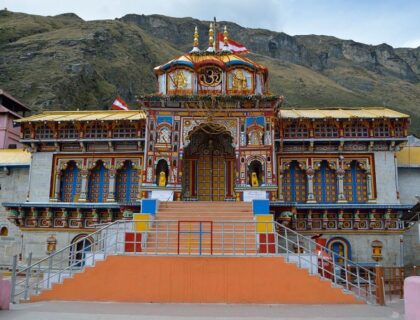
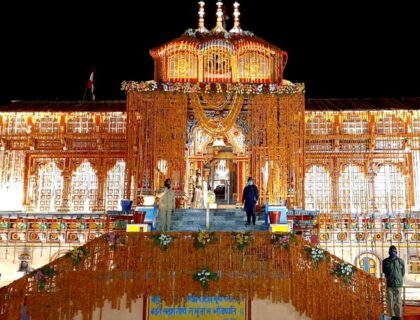
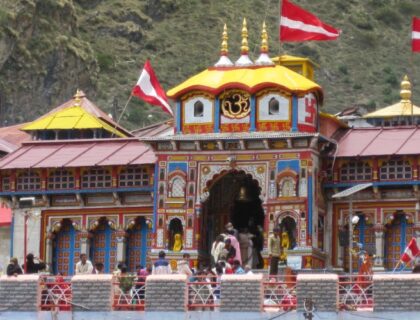
Badrinath Temple is a Hindu temple dedicated to Lord Vishnu located in Uttarakhand’s Garhwal area and is one of the Char Dham pilgrimage sites of India. This temple is one of the eight self-manifested idols of Lord Vishnu. Badrinath is one of the Char Dham Pilgrimages in India which is said to be Satya Yuga Temple.

Badrinath Temple is also among the 108 Divyadesam Temples dedicated to Lord Vishnu. This temple is also special among Panch Badri Temples. Other temples include Bhavishya Badri, Yog Dhyan Badri, Adi Badri, and Vriddha Badri. The holy river Saraswati originates in a glacier near Badrinath Temple.

Story Behind Badrinath Temple

According to legend, Lord Vishnu wondered here, regardless of the super weather patterns. To protect him from the cold, Goddess Lakshmi took the form of a Badri or Jujube tree. Lord Vishnu was moved by Goddess Lakshmi’s devotion and gave the location the name Badri Ashram. At this location, Lord Vishnu performed penance for the benefit of humanity. The Pandavas ascended to heaven via Mana village, which is the same location as Badrinath. It is said to be India’s last village, and in a cave there, Rishi Vyasa wrote the epic Mahabharata.

Badrinath Temple

Another legend in the Vishnu Purana mentions Dharam’s two sons, Nar and Narayan. They chose Badrinath and practised Dhyana there to spread the virtues of Hinduism throughout the Himalayan region. They discovered Yog Bhadri, Bridha Badri, Dhyan Badri, and Bhavish Badri, all Badri from the Pancha Badri section while looking for the ideal location for a hermitage. They eventually settled in the hot and cold Alakananda River spring. Badri Vishal is the name given to the location. Nar and Narayan later transformed into mountains that stand beside and behind the Badrinath Temple.

History of Badrinath Temple

“According to Skand Puran, Adiguru Shankaracharya recovered the Lord Badarinath idol from Narad Kund and re-enshrined it in this temple in the 8th century A.D.”

According to Hindu tradition, Adi Shri Shankaracharya reestablished Badarinath, also known as Badari Vishal, in order to restore Hinduism’s lost prestige and unite the nation. It was built at a time when Hinduism was worried that it was losing its importance and glory as Buddhism spread throughout the Himalayan range. So Adi Sankaracharya volunteered to restore Hinduism’s greatness and built sanctuaries in the Himalayas for the Hindu Lords of Shiva and Vishnu.

The Badrinath Temple is one of these shrines, and it contains numerous sacred accounts from various ancient Hindu scriptures. The puranic tale of the Pandav brothers and Draupadi passing through on their final pilgrimage by ascending the slopes of a peak near Badarinath called Swargarohini, also known as the “Ascent to Heaven,” or the visit of Lord Krishna and other great sages are just a few of the many stories associated with this holy tirtha.

Badrinath Temple

In the 16th century, the king of Garhwal relocated the Lord Vishnu idol from Padmasana Mudra to the current temple grounds. From then on, the idol was worshipped here. Following the division of the Garhwal district, the area surrounding the Badrinath Temple came under British control. Regardless, the Ruler of Garhwal continued to oversee the temple’s administration. Even so, the Garhwal and Travancore families were undoubtedly consulted when the priest or Badrinath Rawal was appointed.

In fact, the Badrinath Temple area was expanded in the 17th century by the Kings of Garhwal district. Following a significant earthquake in 1803, the King of Jaipur rebuilt the temple. From that point until the First World War, the renovation project was completed.

Architecture of Badrinath Temple

The temple has a small cupola on top and stands about 50 feet tall. It has a roof made of gold gilt. There are three parts to the Badarinath temple: a) the sanctum sanctorum, or Garbha Griha; b) the Darshan Mandap, where rituals are performed; and c) the Sabha Mandap, where pilgrims gather. Singhdwar, the colourful and imposing main gate of Badarinath temple, is a popular name. The idol of Lord Vishnu in the temple is Swayambhu.

Badrinath Temple

Facts about Badrinath Temple

  • The description of this Dham has come in many religious texts like Skanda Purana, Kedarkhand, Shrimad Bhagwat etc.
  •  This statue of Narayana is engraved in the quadrilateral Ardhpadmasana Dhyanmagna posture.
  • It is said that Lord Vishnu did penance here in the form of Narayana at the time of Satyuga.
  • It is said that Tapt Kund’s hot spring water has medicinal properties. Many diseases are cured by bathing in the pot. According to the Skanda Purana, there are numerous holy shrines in heaven, earth, and hell. However, Badrinath is the only sanctum like it.
  • The most significant aspect of this idol is that anyone who saw it had numerous visions of the presiding deity. Even today, adherents of all Hindu, Buddhist, Jain, Sikh, and other sections come here and offer prayers.

Famous Festivals In Badrinath temple

  • Krishna  Janamashtmi- Krishna Janmashtami commemorates Lord Krishna’s birth in Mathura. He is Lord Vishnu’s eighth avatar. Every August, Janmashtami is celebrated here with special pujas all day and night, as it is throughout the country.
  • Badri Kedar Utsav – The tourism ministry of the Uttarakhand government has launched the week-long Badri-Kedar Utsav. Cultural festivals are held in both Badrinath and Kedarnath during July and August. The dates can be found on the website of the Garhwal Mandal Vikas Nigam.
  • Closing Ceremony – The five-day ceremony begins with a special puja at the Ganesh temple before its doors close for the winter. The Adi Kedareshwar temple’s gates are closed on Day 2. On Day 3, there is a book worship, and the Ved Paath and Mantrachaar – the daily recital of mantras – are halted. The goddess Lakshmi is worshipped on Day 4 before the doors of her shrine are closed. On the last day, a special shringar puja of Badrinath is performed in which the image of Lakshmi is brought into the sanctum before the main temple is closed. It will open in April/May of next year, before the summer.

How To reach Badrinath Temple

It is one of Uttarakhand’s most popular temples and is open to pilgrims from May to November. During the winter, when the deity at Joshimath’s Nar Singh Temple is worshipped, the Badrinath Temple remains closed.

By Air: Jolly Grant Airport (35 km from Dehradun) is the closest Air terminal to Badarinath arranged a ways off 314 km. With daily flights, Jolly Grant Airport is well-connected to Delhi. Badarinath and Jolly Grant Airport are well-connected via motorable roads. From Jolly Grant Airport to Badarinath, taxis are available.

By Rail: The nearest railway station to Badarinath is Rishikesh. Rishikesh railway station is 295 km before Badarinath on NH58. Rishikesh is well connected by railway networks with major destinations of India.

By Road: From major Uttarakhand cities like Dehradun, Haridwar, Rishikesh, Pauri, Rudraprayag, Karnaprayag, Ukhimath, Srinagar, and Chamoli, buses and taxis to Badarinath are easily accessible. National Highway 58 connects Badarinath to Ghaziabad.

Read More

Support Us

If our content helps you even 1% in gaining information about the temple, please support us by contributing any amount, our UPI ID is - q417999792@ybl Or pay using QR CODE >>> Click Now

Location

Facilities

  • Drinking Water
  • Pooja Item Shops
  • Prasad Shops
  • Restaurants Nearby
  • Resting Room
Frequently Asked Questions

Badrinath opening and closing date time during year
Badrinath Temple opens in May (tentative) and will be closed after last Nov . The temple is closed between Nov-April.
What is the distance from Kedarnath temple to Badrinath Temple?
The distance from Kedarnath temple to Badrinath temple is 223.7 km
Share

Open Now

Friday 6 AM - 9 PM
Saturday 6 AM - 9 PM
Sunday 6 AM - 9 PM
Monday 6 AM - 9 PM
Tuesday 6 AM - 9 PM
Wednesday 6 AM - 9 PM
Thursday 6 AM - 9 PM
Address: Badrinath, Uttarakhand, India
Phone: +918979001008Call Now
Website: https://badrinath-kedarnath.gov.in/AboutUs/shri-badrinath.aspx Visit the site
Share
View Details

Open Now

Friday 6 AM - 9 PM
Saturday 6 AM - 9 PM
Sunday 6 AM - 9 PM
Monday 6 AM - 9 PM
Tuesday 6 AM - 9 PM
Wednesday 6 AM - 9 PM
Thursday 6 AM - 9 PM
Address: Badrinath, Uttarakhand, India
Phone: +918979001008Call Now
Website: https://badrinath-kedarnath.gov.in/AboutUs/shri-badrinath.aspxVisit the site
Share

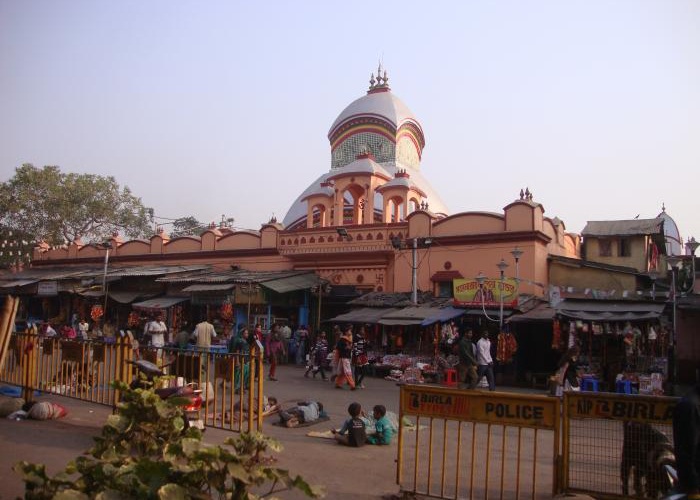
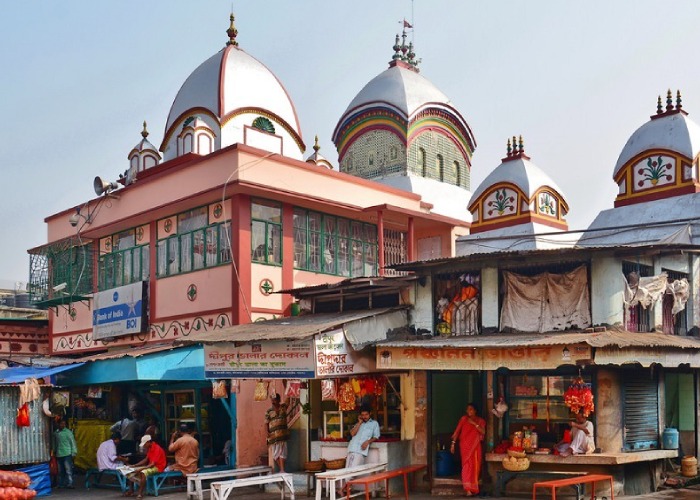
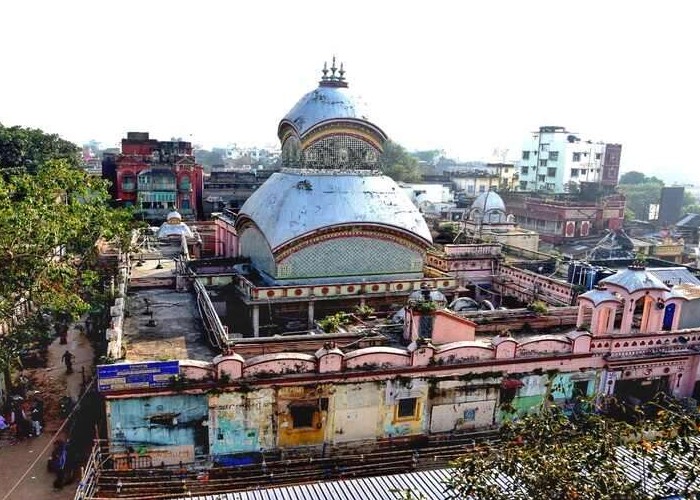
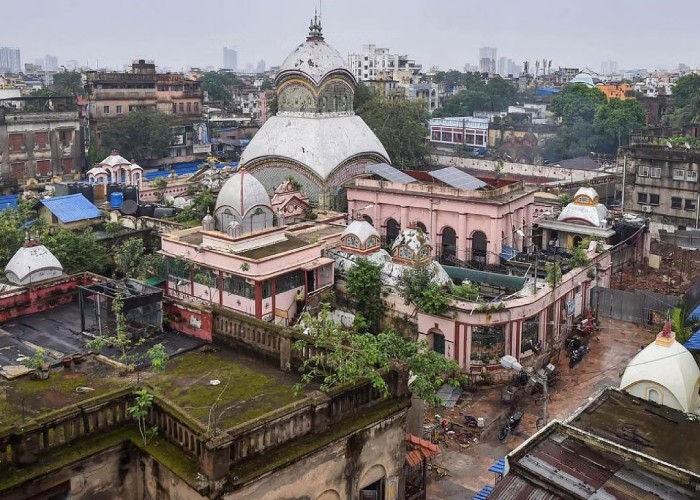
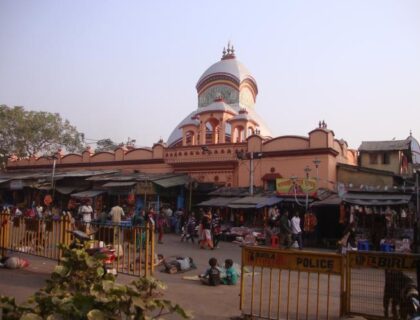
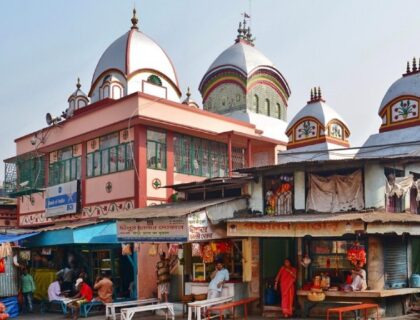
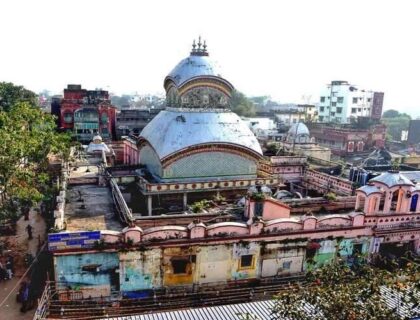
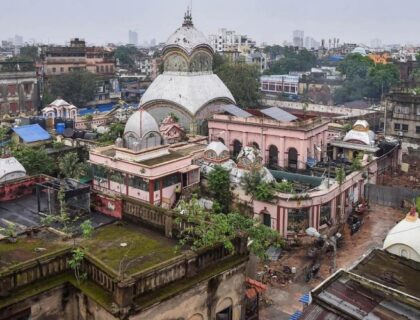
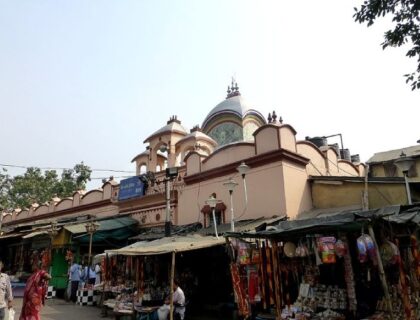
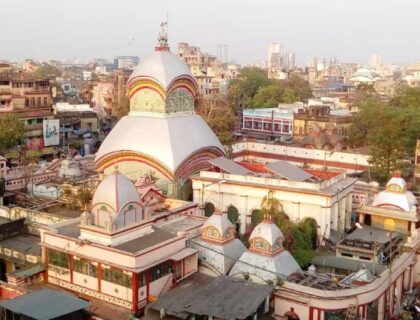
Kalighat Kali Adi Shaktipeeth Temple

The Kalighat Kali Adi Shaktipeeth Temple is a well-known Kali temple also called as Kalighat Mandir located in Kalighat, Kolkata state of India. Kalighat is derived from the Hindu goddess Kali, who is housed in the Temple, and the Ghat refers to the riverbank on which the Temple is located. According to some sources, the name “Kolkata” is derived from the name of the Devi of Kalighat Temple, “Kalikata.”

Kalighat Kali Adi Shaktipeeth is one of the Indian Subcontinent’s 51 Shakti Peethas, where various parts of Sati’s body are said to have fallen during Shiva’s Rudra Tandava.

The story behind Kalighat Kali Adi Shaktipeeth

The goddess of Dakshayani, Sati, Parvati, or Durga—Hinduism’s most important woman and most powerful deity—is referred to as Shakti. Durga Devi, Mahakali, and Gowri are the three main manifestations of Shakti, the power goddess. She is Adi Shakti’s avatar.

Sati was the Prajapati Daksha’s daughter, and she married Lord Shiva despite Her father’s wishes. Prajapati Daksha once put together a massive yagya, but he didn’t call his daughter and son-in-law. Sati was very saddened by Her father’s actions. When she got there, her father ignored the Sati and insulted her. She could not bear insult to his husband (Lord Shiva) and she jumped into the fire of Yagya and committed suicide. She passed away, but her body didn’t burn. Lord Shiva had taken His Virabhadra Rupa out of rage. Daksha’s head was cut off by him, but in the end, He forgave him by bringing him back to life.

lord shiva with sati body

Lord Shiva, devastated, had taken Sati’s body and wandered the universe. Finally, Lord Vishnu used His Chakra to break the Sati’s body into pieces. Each body part transformed into Shakti Pitha. The temple had emerged where the body part had fallen to the ground. In order to safeguard the Shakti Pitha, Lord Shiva created 51 Bhairava for each one.

This sacred temple’s creation is related to Lord Shiva’s Rudra Tandav, who was enraged by Sati’s self-immolation following an argument with her father over not being invited to a puja ceremony at her father’s place.

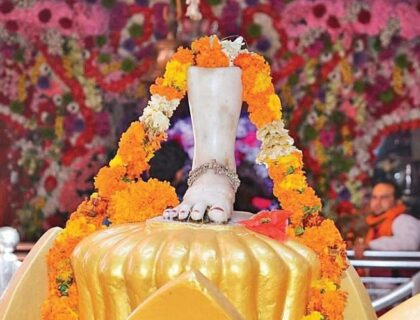
The most well-known story about the Brahmin Atma Ram is Related to Kalighat Kali Temple. He discovered a stone structure resembling a human toe in the Bhagirathi River. He prayed to the stone that evening, and the next night he had a dream in which he discovered Sati’s toe had fallen into the river. In his dream, he was told to build a temple and look for a Swambhu Lingam of Nakuleshwar Bhairav, which he did later.

Kalighat Kali Adi Shaktipeeth

History of Kalighat Kali Adi Shaktipeeth

The inscription of the Kali temple of Kalighat can be found in both Kavi Kankan Mukunda Das’s “Chandi Mangal” from the 17th century and “Mansar Bhasan” from the 15th century, though the exact date of construction is unknown. Lalmohon Bidyanidhis, on the other hand, wrote it in “Sambanda Nirnay.”

It is said that the temple was an exemplary example of Bengal engineering, which is an underlying imitating of the mud and covered roofed cabins of towns, and was established as a small design by one devout holy person Chouranga Giri (a Dasanami Priest after whom Kolkata’s most well-known and elegant piece, Chowranghee region is named). In the early 16th century, King Mansingha, on the other hand, built a small structure for the original Temple.

Kalighat Kali Adi Shaktipeeth


The Kalighat temple in its present form is only about 200 years old, although it has been referred to in Mansar Bhasan composed in the 15th century, and Kavi Kankan Chandi in the 17th century. The present structure of the temple was completed under the Sabarna Roy Chowdhury family’s patronage in 1809.

The architecture of Kalighat Kali Adi Shaktipeeth

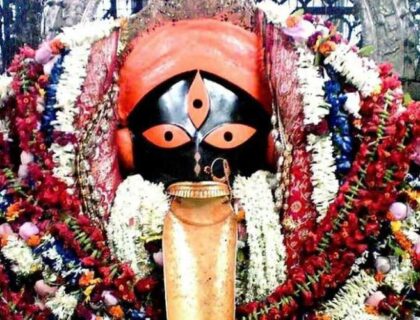
The twin saints Atmaram and Brahmananda Giri carved the Goddess Kali idol out of sandstone, which has four hands, three large eyes, and a long tongue. The tongue and eyes of the idol are made of gold. The idol does not resemble the usual representations of Kali in any other location where she is worshipped.

Kalighat Kali Adi Shaktipeeth

On the grounds of the Kalighat temple, there are several small temples, the most well-known of which is the Sosthi Tala. It’s a three-foot-tall, rectangular altar topped with a small cactus plant. Three stones placed beneath the tree represent the Goddesses Sosthi, Sitola, and Mongolian Chandi. Soshthi Tala or Monosha Tala are other names for this sacred site. Gobinda Das Mondal invented it in 1880. The special stepped area is located at Brahmananda Giri’s Samadhi. It’s strange that there aren’t any male priests here.

Facts about Kalighat Kali Adi Shaktipeeth

  • Kalighat is acknowledged as one of the Adi Shakti Peetha across India, where the toes of the right foot of Sati fell during the Rudra Tandava of Lord Shiva.
  • Kalighat Temple was built by the Sabarna Roy Chowdhury family of Barisha, about 200 years ago.
  • A characterizing element of the Goddess Kali of Kalighat sanctuary is the long distending tongue, made of unadulterated gold.
  • In close proximity to the Kalighat temple is the Nakuleswar Mahadeva temple, which is also quite old and well worth a visit.
  • The Kalighat temple’s Hari-Kath tala is an important location. It is the exact spot where animals are sacrificed, and it is very important to religion.
  • Chaitra Yatra/Chaitra Parba/Chaitra Mela is the most important festival celebrated here.
  •  Lakhs of devotees come from every corner of India to have the Darshan of Kalighat Kali.
  • According to legends, the city of Calcutta was named after Kalighat.

Famous Festivals In Kalighat Kali Adi Shaktipeeth

  • Durga Puja. (Winter) – Devotees celebrate Navaratri at this temple in the month of Ashwin (Sep-Oct).
  • Navaratri. (Summer) – They celebrate other Navaratri in the fortnight of the Chaitra (March-April). Every nine days they worship Navadurga (nine Durgas).
  • Diwali – Diwali is one of the most admired and auspicious festivals in the town.
  • Mahashivratri– A grand fair is organized at the temple during the occasion of Maha Shivratri.

How to Reach Kalighat Kali Adi Shaktipeeth

The Kalighat stemple settles on the banks of the Adi Ganga Stream in the southern area of the city of Kolkata. In Kolkata, near Bhowanipur, it can be found in the area known as Kalighat.

By Air: The Netaji Subhash Chandra Bose International Airport which is 25 km from the temple.

By Rail: Howrah Junction is the nearest Railway Station which is about 10 Km from the temple.

By Road: Shyamaprasad Mukherjee Road is a short distance from the Temple. This road must be used by buses travelling toward south Kolkata. Explorers should get down the Kalighat transport pause and stroll down Kali Temple Street to arrive at the Kali Temple.

Metro Rail: The metro railway (underground and subway) connects Kalighat Kali Temple to all parts of the city. To get to this Temple, devotees or pilgrims can use the Kalighat metro station (south exit) or the Jatin Das Park metro station (north exit).

Also Read – Kamakhya Adi Shaktipeeth

Read More

Support Us

If our content helps you even 1% in gaining information about the temple, please support us by contributing any amount, our UPI ID is - q417999792@ybl Or pay using QR CODE >>> Click Now

Location

Facilities

  • Drinking Water
  • Pooja Item Shops
  • Prasad Shops
  • Restaurants Nearby
  • Resting Room
Share

Open Now

Friday 5 AM - 10 PM
Saturday 5 AM - 10 PM
Sunday 5 AM - 10 PM
Monday 5 AM - 10 PM
Tuesday 5 AM - 10 PM
Wednesday 5 AM - 10 PM
Thursday 5 AM - 10 PM
Address: Kalighat Kali Mandir, Anami Sangha, Kalighat, Kolkata, West Bengal, India
Phone: 03322436440Call Now
Website: https://kalighatkalitemple.com/ Visit the site
Share
View Details

Open Now

Friday 5 AM - 10 PM
Saturday 5 AM - 10 PM
Sunday 5 AM - 10 PM
Monday 5 AM - 10 PM
Tuesday 5 AM - 10 PM
Wednesday 5 AM - 10 PM
Thursday 5 AM - 10 PM
Address: Kalighat Kali Mandir, Anami Sangha, Kalighat, Kolkata, West Bengal, India
Phone: 03322436440Call Now
Website: https://kalighatkalitemple.com/Visit the site
Share

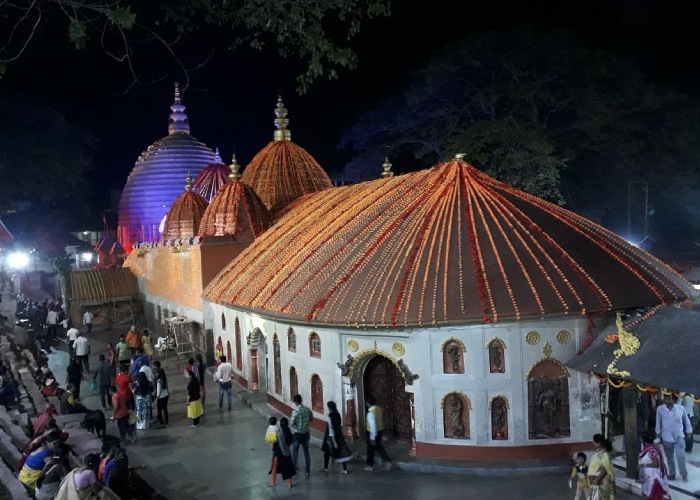
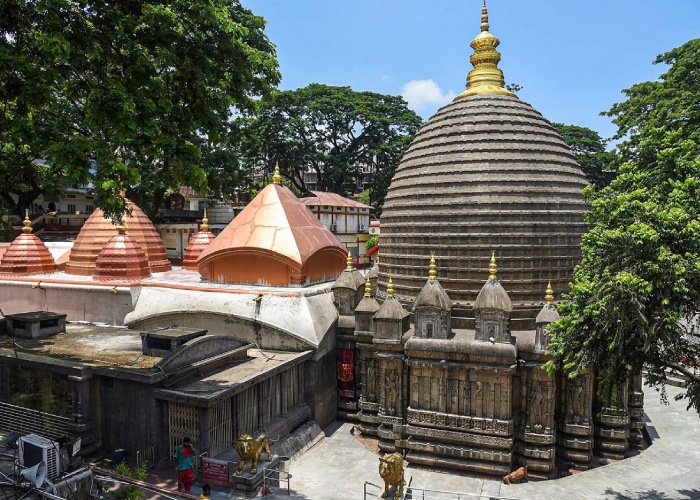
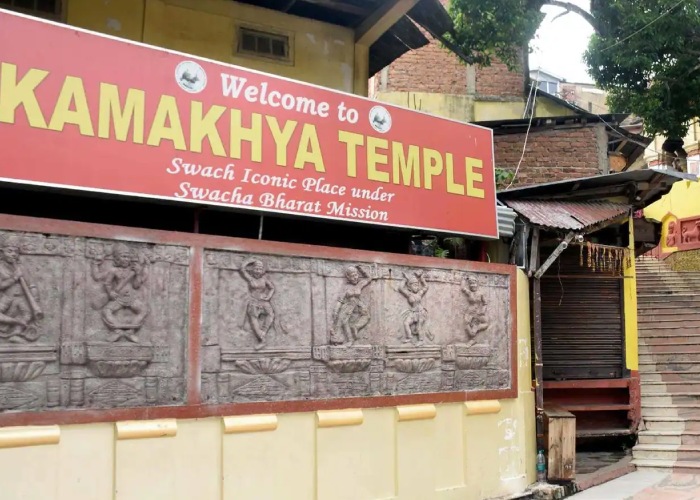
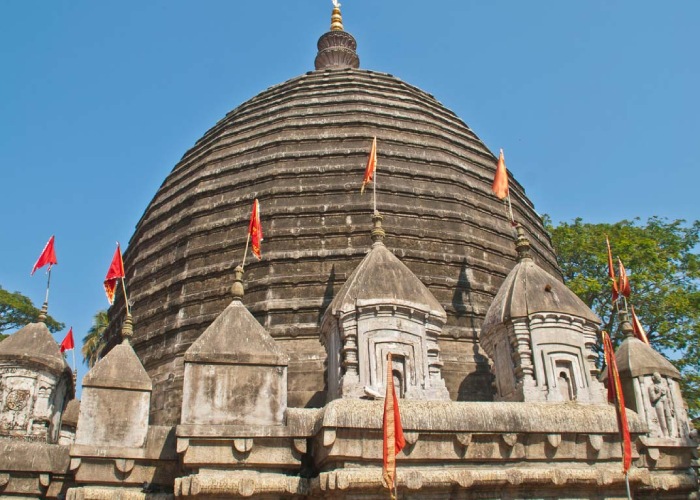
Kamakhya Adi Shaktipeeth

Kamakhya Adi Shaktipeeth is one of four Adi Shakti Peethas dedicated to dedicated to Mata Sati’s Yoni Khanda (vagina) located in Guwahati, Assam State, India. The principal deity in this temple is Devi Kamakhya, and it is dedicated to Mata Sati. This temple can be found on top of Nilachal Hill in Guwahati, Assam. Kamakhya Devi is also known as the Bleeding Goddess.

It is also considered a tantra peetha. Apart from the Kamakhya Temple, the other three important Adi Shakti Peethas are Tara Tarini (Sthana Khanda) near Brahmapur, Bimala (Pada Khanda) within the Jagannath Temple in Puri, and Dakshina Kalika (Mukha Khanda) in Kolkata.

The story behind Kamakhya Adi Shaktipeeth

The goddess of Dakshayani, Sati, Parvati, or Durga—Hinduism’s most important woman and most powerful deity—is referred to as Shakti. Durga Devi, Mahakali, and Gowri are the three main manifestations of Shakti, the power goddess. She is Adi Shakti’s avatar.

Sati was the Prajapati Daksha’s daughter, and she married Lord Shiva despite Her father’s wishes. Prajapati Daksha once put together a massive yagya, but he didn’t call his daughter and son-in-law. Sati was very saddened by Her father’s actions. When she got there, her father ignored the Sati and insulted her. She could not bear insult to his husband (Lord Shiva) and she jumped into the fire of Yagya and committed suicide. She passed away, but her body didn’t burn. Lord Shiva had taken His Virabhadra Rupa out of rage. He cut off Daksha’s head, but in the end, He forgave him by bringing him back to life.

lord shiva with sati body

Lord Shiva, devastated took Sati’s body and wandered the universe. Finally, Lord Vishnu used His Chakra to break the Sati’s body into pieces. Each body part transformed into Shakti Pitha. The temple had emerged where the body part had fallen to the ground. To safeguard the Shakti Pitha, Lord Shiva created 51 Bhairava for each one.

The Kamakhya Adi Shaktipeeth is associated with numerous Stories. According to the “Kalika Purana,” the Kamakhya temple was one of the locations where Goddess Sati secretly retreated to satisfy her love for Lord Shiva. It is also believed that the “Yoni” of Goddess Sati fell into the temple when Lord Vishnu cut her body.

Because the exact location of the uterus’s fall was unknown at the time, Kamadev, the God of Love, set out to find it to lift a curse placed on him. Kamadev discovered it on the Nilachal hills and built a temple to the Goddess. Because Kamadev later reclaimed his body in this location, it was named “Kamrupa,” Kamadev worshipped the presiding deity “Kamakhya.”

History of Kamakhya Adi Shaktipeeth

The current temple structure was constructed in 1565 by Chilarai of the Koch Dynasty. There are three significant chambers in the sanctuary. A small idol of Goddess Kamakhya was later added to the temple in the square middle chamber. The middle chamber leads to a cave-like sanctum sanctorum. The large, rectangular western chamber is not used for worship by the general public. Within walls, there are cut engravings of Nara Narayana and other related engravings.

Kamakhya Adi Shaktipeeth

A shikhara-like beehive can be found in the Kamakhya temple. Chamundeswari, Ganes, and other dancing figures are sculpted onto the temple’s walls. The temple was renovated and rebuilt numerous times throughout its development. The temple was also renovated by Ahom King Jayadhvaj Singha and subsequent Ahom kings in 1658. It is also known that King Rudra Singha and his son Siba Singha took care of the temple when they were alive.

The architecture of Kamakhya Adi Shaktipeeth

The Kamakhya temple complex contains additional temples dedicated to various goddesses. Sitala Temple, Lalita Kanta Temple, Jaya Durga Temple, Vana Durga Temple, Rajarajesvari Temple, Smasanakali Temple, Kali Temple of Abhayananda Dharmashala, and Sankhesvari Temple are all included in this group. There are five sanctuaries of Ruler Shiva in the Kamakhya complex. They include Kamesvara (Umananda), Siddhesvara, Amratokesvara (Heruka), Aghpra, and Kotilinga (Tatpurusa), all of whom are manifestations of Lord Shiva.

Kamakhya Adi Shaktipeeth

Three temples dedicated to Lord Visnu are also part of the complex. They are the Kedara (Kamalesvara), which is near the main temple’s northern side; the Gadadhara, which is in the Kamakhya temple’s northwest; and Pandunath, which is in the eastern foothills of Nilachal and is also known as Pandu.

Facts about Kamakhya Adi Shaktipeeth

  • Kamakhya temple is Guwahati‘s most popular attraction and one of India’s most prominent temples.
  • Dedicated to Mother Goddess Kamakhya, the Kamakhya temple is one of the oldest of the 51 Shaktipeeths.
  • The temple complex houses temples dedicated to ten mahavidyas, of which the Kamakhya temple is the main one.
  •  It is one of the temples where the sacrificial form of worship is followed till date.
  • Devotees often come with goats as offerings to the Goddess. The annual festival called Ambubachi Mela attracts a lot of tantric worshipers and is a grand event.
  • The Shakti Peetha is surrounded by 10 small temples devoted to Mata Kali, in her different avatars namely, Dhumavati, Bagola, Tara, Matangi, Bharavi, Kamala, Chinnamasta, Bhuvaneshwari and Tripura Sundari.

Famous Festivals In Kamakhya Adi Shaktipeeth

Millions of people visit this temple every year to celebrate all of the festivals that are held here. Some major festivals held here are

  • Durga Puja. (Winter) – Devotees celebrate Navaratri at this temple in the month of Ashwin (Sep-Oct) and celebrate the triumph of the Goddess Durga over the buffalo demon (Mahishasura).
  • Navaratri. (Summer) – They celebrate other Navaratri in the fortnight of the Chaitra (March-April). Every nine days they worship Navadurga (nine Durgas).
  • Ambubachi Mela – Ambubachi Mela is one of the biggest congregations in eastern India. It is the most important festival of the Kamakhya temple and is celebrated in June every year.

How To reach Kamakhya Adi Shaktipeeth

The Kamakhya temple is easily accessible as it is situated at the centre of Guwahati city.

By Air: Lokapriya Gopinath Bordoloi International Airport. The temple is about 20 km from the airport.

By Rail: Guwahati railway station. The temple is about 6 km from the Guwahati railway station

By Road: Regular buses, taxis and cabs run from the city to the Kamakhya Adi Shaktipeeth.

Also Read – Kalighat Kali Adi Shaktipeeth

Read More

Support Us

If our content helps you even 1% in gaining information about the temple, please support us by contributing any amount, our UPI ID is - q417999792@ybl Or pay using QR CODE >>> Click Now

Location

Facilities

  • Drinking Water
  • Pooja Item Shops
  • Prasad Shops
  • Restaurants Nearby
  • Resting Room
Frequently Asked Questions

Important Information on Kamakhya Temple
  • Snana, or bathing of the Pithasthana, occurs at 5:30 in the morning.
  • Nitya puja occurs at 6:00 in the morning. 
  • The temple door opens to devotees at 8:00 in the morning.
  • The temple door closes for offerings to the goddess at 1:00 in the afternoon. 
  • The temple door reopens to devotees at 2:30 in the afternoon.
  • Aarati of Goddess after which temple door closes for the night at 5:30 PM
Share

Open Now

Friday 8 AM - 8 PM
Saturday 8 AM - 8 PM
Sunday 8 AM - 8 PM
Monday 8 AM - 8 PM
Tuesday 8 AM - 8 PM
Wednesday 8 AM - 8 PM
Thursday 8 AM - 8 PM
Address: Kamakhya Temple, Kamakhya, Guwahati, Assam, India
Phone: 03612734654Call Now
Website: https://www.maakamakhya.org/ Visit the site
Follow Us:
Share
View Details

Open Now

Friday 8 AM - 8 PM
Saturday 8 AM - 8 PM
Sunday 8 AM - 8 PM
Monday 8 AM - 8 PM
Tuesday 8 AM - 8 PM
Wednesday 8 AM - 8 PM
Thursday 8 AM - 8 PM
Address: Kamakhya Temple, Kamakhya, Guwahati, Assam, India
Phone: 03612734654Call Now
Website: https://www.maakamakhya.org/Visit the site
Follow Us:
Share

Tara Tarini Adi Shaktipeeth

Tara Tarini Adi Shaktipeeth is a well-known Adi Shaktipeeth on Kumari hills and Tarini Parvat near Purushottampur in the Ganjam district of Odisha. This hill is also known as Purnagiri or Ratnagiri which is about 28 kilometres from Brahmapur. Maa Tara Tarini is revered as Adi Shakti Sati Devi’s Breast Shrine (Sthana Peetha) here. The temple is one of the oldest Mother Goddess pilgrimage sites in India, as well as one of the four major Adi Shakti Peethas and Tantra Peethas.

The story behind Tara Tarini Adi Shaktipeeth

The goddess of Dakshayani, Sati, Parvati, or Durga—Hinduism’s most important woman and most powerful deity—is referred to as Shakti. Durga Devi, Mahakali, and Gowri are the three main manifestations of Shakti, the power goddess. She is Adi Shakti’s avatar.

Sati was the Prajapati Daksha’s daughter, and she married Lord Shiva despite Her father’s wishes. Prajapati Daksha once put together a massive yagya, but he didn’t call his daughter and son-in-law. Sati was very saddened by Her father’s actions. When she got there, her father ignored the Sati and insulted her. She could not bear insult to his husband (Lord Shiva) and she jumped into the fire of Yagya and committed suicide. She passed away, but her body didn’t burn. Lord Shiva had taken His Virabhadra Rupa out of rage. Daksha’s head was cut off by him, but in the end, He forgave him by bringing him back to life.

lord shiva with sati body

Lord Shiva, devastated, had taken Sati’s body and wandered the universe. Finally, Lord Vishnu used His Chakra to break the Sati’s body into pieces. Each body part transformed into Shakti Pitha. The temple had emerged where the body part had fallen to the ground. In order to safeguard the Shakti Pitha, Lord Shiva created 51 Bhairava for each one.

The Tara Tarini Adi Shaktipeeth, unlike others, was built by a Brahmin named Basu Praharaj, a great devotee of Ma Devi Shakti. This is in contrast to the common belief that temples are built by kings. In a dream, Goddess Shakti appeared to him and blessed him with twin daughters. Both daughters vanished after a long period of time, but Basu still cared for them and believed in the goddess. Ma appeared in Basu’s dream once more, instructing him to build a temple on Kumari, also known as Purnagiri Hills. Lord Krishna and Arjun prayed to Bhadrkali for strength here in the Mahabharata.

History of Tara Tarini Adi Shaktipeeth

Prior to the start of the Mahabharata war, Lord Sri Krishna advised Arjuna to pray for victory at Shridevi Kupa, also known as Bhadrakali. Bhadrakali, like the other four major Adi Shakti Peethas, was formed from Sati’s limbs around 6000 years ago, around the time the Mahabharata was written. This is the earliest evidence we have of the existence of shrines made from the limbs of Devi Sati’s divine body.

Tara Tarini Adi Shaktipeeth

The architecture of Tara Tarini Adi Shaktipeeth

Tara and Tarini are represented by two ancient stone statues adorned in gold and silver. There are two exquisite brass heads sandwiched between them as their Chalanti Pratima. Taratarini temple is adorned with fiery sculptures and boasts brilliant craftsmanship and Kalinga engineering. Throughout the year, devotees of Ma Devi Shakti and Buddhists of the Mahayana sect, who practise tantra rituals similar to Hindus, visit this site. Taratarini temple is thus also known as Tantrik Peeth. Shakti and Ista Devi of the Ganjam region are represented by the twin goddesses Tara and Tarini.

Tara Tarini Adi Shaktipeeth

Facts about Tara Tarini Adi Shaktipeeth

  • Normally temples were built by the king but the Tara Tarini Adi Shaktipeeth was built by the Brahmin, named Basu Praharaj – a great devotee of Ma Devi Shakti.
  • The Tara Tarini Adi Shaktipeeth shrine is one of the most revered Shakti Peethas and Tantra Peethas, as well as a major pilgrimage site for the Shakta (Shaktism) sect of Hinduism.
  • The four major Shakti Peethas are recognised in religious texts such as the Shiva Purana, the Kalika Purana (the Asthashakti), and the Devi Bhagavata, as well as Tantric texts such as Hevajra Tantra, Sthana-nirupana Tantra, and many more Tantras.
  • This Tara Tarini Adi Shaktipeeth is among the 4 Adi Shaktipeeth Temples which are considered as most powerful temples.
  • Chaitra Yatra/Chaitra Parba/Chaitra Mela is the most important festival celebrated here.
  • Lakhs of devotees come from every corner of India during this month to have the Darshan of Tara Tarini.
  • The temple is situated at around 708 feet above ocean level and can be arrived at by motorable street or ropeway or climbing about 1000 steps.

Famous Festivals In Tara Tarini Adi Shaktipeeth

  • Durga Puja. (Winter) – Devotees celebrate Navaratri at this temple in the month of Ashwin (Sep-Oct).
  • Navaratri. (Summer) – They celebrate other Navaratri in the fortnight of the Chaitra (March-April). Every nine days they worship Navadurga (nine Durgas).
  • Diwali – Diwali is one of the most admired and auspicious festivals in the town.
  • Mahashivratri– A grand fair is organized at the temple during the occasion of Maha Shivratri.

How to Reach Tara Tarini Adi Shaktipeeth

The Behrampur is very well connected with the major cities of the state.

By Air: The nearest Airport is in Bhubaneshwar at a distance of 174kms.

By Rail: The nearest Railway Station is Behrampur Railway Station at a distance of 32 km.

By Road: Taxi services are available from Behrampur to Tara Tarini. Regular bus services from Behrampur to Purushottampur, Polsara, Kavisuryanagar, Aska, Kodala etc. are available via Tara Tarini junction.

Read More

Support Us

If our content helps you even 1% in gaining information about the temple, please support us by contributing any amount, our UPI ID is - q417999792@ybl Or pay using QR CODE >>> Click Now

Location

Facilities

  • Drinking Water
  • Pooja Item Shops
  • Prasad Shops

Frequently Asked Questions

Best Time To Visit
October to March, During Both Navratri
Is Drinking Water facility there ?
Yes inside the temple complex.
Is pooja item shops there.
Ya, before you climb the hill there are shops related to puja items and others.
Share

Open Now

Friday 6 AM - 8 PM
Saturday 6 AM - 8 PM
Sunday 6 AM - 8 PM
Monday 6 AM - 8 PM
Tuesday 6 AM - 8 PM
Wednesday 6 AM - 8 PM
Thursday 6 AM - 8 PM
Address: Maa Tara Tarini Temple, near Rushikulya River, Raipur, Purusottampur, Odisha, India
Phone: +916802281456Call Now
Website: http://taratarini.nic.in/ Visit the site
Share
View Details

Open Now

Friday 6 AM - 8 PM
Saturday 6 AM - 8 PM
Sunday 6 AM - 8 PM
Monday 6 AM - 8 PM
Tuesday 6 AM - 8 PM
Wednesday 6 AM - 8 PM
Thursday 6 AM - 8 PM
Address: Maa Tara Tarini Temple, near Rushikulya River, Raipur, Purusottampur, Odisha, India
Phone: +916802281456Call Now
Website: http://taratarini.nic.in/Visit the site
Share

Puri Vimala Shaktipeeth

Puri Vimala Shaktipeeth dedicated to the goddess Bimala is one of the four Adi Shakti Peethas located Inside the Jagannath temple complex in Puri, Odissa. The temple is situated to the right of Jagannath temple and adjacent to the sacred Rohini Kund. It is believed that Sati Devi’s feet, or Pada Khanda, fell here.

The temple is regarded as the most important of all the Shaktipeeths. Lord Jagannath adored the Bhairav structure because it represents an integration of Vaishnav and Shaivite convictions. Bimala is regarded as Shakti’s peaceful manifestation.

The story behind Puri Vimala Shaktipeeth

The goddess of Dakshayani, Sati, Parvati, or Durga—Hinduism’s most important woman and most powerful deity—is referred to as Shakti. Durga Devi, Mahakali, and Gowri are the three main manifestations of Shakti, the power goddess. She is Adi Shakti’s avatar.

Sati was the Prajapati Daksha’s daughter, and she married Lord Shiva despite Her father’s wishes. Prajapati Daksha once put together a massive yagya, but he didn’t call his daughter and son-in-law. Sati was very saddened by Her father’s actions. When she got there, her father ignored the Sati and insulted her. She could not bear the insult of his husband (Lord Shiva) and she jumped into the fire of Yagya and committed suicide. She passed away, but her body didn’t burn. Lord Shiva had taken His Virabhadra Rupa out of rage. Daksha’s head was cut off by him, but in the end, He forgave him by bringing him back to life.

lord shiva with sati body

Lord Shiva, devastated, had taken Sati’s body and wandered the universe. Finally, Lord Vishnu used His Chakra to break the Sati’s body into pieces. Each body part transformed into Shakti Pitha. The temple had emerged where the body part had fallen to the ground. In order to safeguard the Shakti Pitha, Lord Shiva created 51 Bhairava for each one.

History about Puri Vimala Shaktipeeth

The central Vimala icon dates from the sixth century CE. The current structure appears to have been built in the ninth century during the Eastern Ganga dynasty, possibly over the ruins of an earlier temple, based on its architecture. Its architecture is similar to that of the ninth-century Narasimha shrine near the Mukti-mandapa (a temple hall) in the Jagannath temple complex.

Madala Panji’s Yayati Keshari refers to the kings Yayati I (circa 922-955) and Yayati II (circa 1025-1040). The sculptures, particularly the parshva devatas (attendant deities) and the central icon’s background slab are in the Somavashi style. The sculptures could be from the original temple, which was built on the ruins of the new temple. Vimala is thought to have existed before the central Jagannath shrine.

Puri Vimala Shaktipeeth

Hindu philosopher and saint Adi Shankara (c. 8th century) is believed to have established Govardhana matha in Puri, with Vimala as its presiding goddess. The Jagannath Temple, according to Starza (author of The Jagannatha Temple at Puri), was once a place of worship for the Trimurti of Brahma, Vishnu, and Shiva, as well as their consorts and the three central forms of the Hindu Goddess, Sarasvati, Lakshmi, and Parvati (in the form of Vimala).

The architecture of Puri Vimala Shaktipeeth

The Puri Vimala Shaktipeeth is built of sandstone and laterite and faces east. It is in the southwest corner of the inner enclosure of the Jagannath temple complex and on the right-western corner of the tower of Jagannath, next to the sacred pond Rohini Kunda. It is constructed in the Deula style and consists of four parts: the vimana, which houses the sanctum, the assembly hall, the nata-mandapa, which is the festival hall, and the bhoga-mandapa, which is the hall of offerings. The sanctuary is kept up with and was redesigned around 2005 by the Archeological Review of India, Bhubaneswar Circle.

Puri Vimala Shaktipeeth

Facts about Puri Vimala Shaktipeeth

  • This Puri Vimala Shaktipeeth is situated behind the main temple of Lord Jagannath and is dedicated to Goddess Vimala
  • Since it is a Shakti temple, all rituals adhere to Shakti practices. Fish is only offered on Durga Puja’s Mahashtami Day.
  • The Puri Vimala Shaktipeeth is considered one of the Adi Shakti Pithas, the most sacred temples of the Hindu Goddess, identified with Parvati or Durga
  • The vegetarian food offerings to Jagannath are offered to Vimala, after which they are sanctified as Mahaprasad.
  • The only time of year, when separate food is prepared for the goddess, is when she is presented with non-vegetarian offerings. During Durga Puja, Vimala is served non-vegetarian food and animal sacrifice, as is customary for the Hindu Mother Goddess.
  • It is regarded as a prime example of the Shakti tradition’s significance in Odisha. It is customary to worship the god Shiva (Parvati’s consort) in the form of Bhairava, the male counterpart or guardian of the Shakti Pitha’s presiding goddess.

Famous Festivals In Puri Vimala Shaktipeeth

  • Durga Puja. (Winter) – Devotees celebrate Navaratri at this temple in the month of Ashwin (Sep-Oct).
  • Navaratri. (Summer) – They celebrate other Navaratri in the fortnight of the Chaitra (March-April). Every nine days they worship Navadurga (nine Durgas).
  • Diwali – Diwali is one of the most admired and auspicious festivals in the town.
  • Mahashivratri– A grand fair is organized at the temple during the occasion of Maha Shivratri.

How to Reach Puri Vimala Shaktipeeth

Commuting to the temple is quite easy as auto rickshaws, battery-operated rickshaws, local buses and private taxis are available in the city.

By Air: The nearest airport to Puri is the Biju Patnaik International Airport in Bhubaneswar. The distance from the airport to the Puri Vimala Shaktipeeth is approximately 60.2 km, and it takes about 1 hour and 14 minutes to arrive here.

By Rail: From the Puri Railway Station, the distance to the Puri Vimala Shaktipeeth is about 3 km and can be easily covered in approximately 11 minutes.

By Road: Devotees can hire private cabs to reach the shrine or else they can travel by train or bus, which run from Bhubaneswar to Puri at regular intervals.


Read More

Support Us

If our content helps you even 1% in gaining information about the temple, please support us by contributing any amount, our UPI ID is - q417999792@ybl Or pay using QR CODE >>> Click Now

Location

Facilities

  • Drinking Water
  • Pooja Item Shops
  • Prasad Shops
  • Restaurants Nearby
  • Resting Room
Share

Open Now

Friday 5 AM - 10 PM
Saturday 5 AM - 10 PM
Sunday 5 AM - 10 PM
Monday 5 AM - 10 PM
Tuesday 5 AM - 10 PM
Wednesday 5 AM - 10 PM
Thursday 5 AM - 10 PM
Address: Shri Vimala Shakti Peetha Temple, Puri, Puri, Odisha, India
Share
View Details

Open Now

Friday 5 AM - 10 PM
Saturday 5 AM - 10 PM
Sunday 5 AM - 10 PM
Monday 5 AM - 10 PM
Tuesday 5 AM - 10 PM
Wednesday 5 AM - 10 PM
Thursday 5 AM - 10 PM
Address: Shri Vimala Shakti Peetha Temple, Puri, Puri, Odisha, India
Share

Nageshwar Jyotirling

Nageshwar Jyotirling also known as Nageshvara Jyotirling dedicated to lord shiva 12 jyotirling which is located on the bank of Saurashtra in Gujarat. This temple is dedicated to Lord Shiva and is considered as one of the 12 Jyotirlinga in Gujrat. The Jyotirlinga’s sanctum is underground. This temple is best known for its 25-meter-tall Lord Shiva statue, which stands in a large garden surrounded by a pond.

A person who worships Nageshwar will have a poison-free mind and body because his name means “Lord of serpents.” Lord Shiva also wears a Vasuki (snake) around his neck. The Nageshwar Jyotirlinga is located in Daarukavanam on the coast of Saurashtra in Gujarat, India, between Gomti and Dwarka.

The story behind Nageshwar Jyotirling

The Shiva Purana tells the story of a demon couple named Daruka and Daruki 100 years ago. The demons abused their immense power to disrupt festivities as a result of a blessing from Goddess Parvati. Even a merchant named Supriya, a great devotee of Lord Shiva was captured and held captive.

nageshwar jyotirling

Supriya continued performing his sacred rudraksha and chanting the Shiva mantra Om Namah Shivaya even while incarcerated. As the Lord appeared to him, slain the demon, and saved him, his devotion touched him. Daarukavanam is the name of the location where the demon was slain. The Shiva Linga, also known as Naganath, is said to have been placed there by the Lord to make his home there.

History of Nageshwar Jyotirling

At Kalika Peetha, it is believed that Adi Shankaracharya established the foundations of his Western Math. And again over time the temple was built by the Seuna (Yadava) dynasty in the Hemadpanthi style and is said to be of the 13th century, a seven-storied stone building. Aurangzeb destroyed the temple’s buildings during Chhatrapati Sambhaji Maharaj’s reign. Ahilyabai Holkar rebuilt the temple’s current standing spire and we see it even today.

nageshwar jyotirling 8

Architecture of Nageshwar Jyotirling

This temple has a large garden, a pond, and a 25-meter-tall statue of Lord Shiva seated. Small chakras are carved into the Dwaraka shila that makes up the linga. It is shaped like a tri-mukhi rudraksha, which are sacred beads that represent Lord Shiva, and it faces south, while the temple faces east.

Nageshvar Jyotirling

Facts about Nageshwar Jyotirling

  • It is believed that those who meditate here and worship Nageshwar Jyotirlinga temple will be freed from all poisons, both physical and spiritual (such as rage and temptation)
  • There is some confusion regarding the precise location of the jyotirlinga. Nagnath at Audhgram near Purna in Andhra Pradesh and Jageshwar temple near Almora in Uttar Pradesh are two additional temples with shrines dedicated to Nageshwar.
  • The history of why the Linga faces south is fascinating. Other devotees, according to legend, asked a devotee named Naamdev to step aside and not conceal the Lord while chanting his name. Naamdev challenged the others to point out a location where the Lord does not exist. Irate devotees carried him south and abandoned him. They were taken aback by the fact that the linga was also facing south!
  • People also worship Goddess Parvati along with Lord Shiva here.

How to Reach Nageshwar Jyotirling

Even though you can go to this spiritual location at any time of the year, it’s best to go there in the winter, between September and March. During Mahashivratri, a devotee’s ultimate treat would be to visit this divine and ancient location!

By Air: The nearest airport is Jamnagar Airport, which is 137 km from the Nageshwar Jyotirling temple.

By Rail: Dwarka railway station is about 16 Km from the Nageshwar Jyotirling temple.

By Road: There are direct buses available from Jamnagar and Ahmedabad. Apart from taking a train to Dwarka station, you could also travel by train to Veraval station located only 7 km away from Dwarka.

Also Read – Grishneshwar Jyotirling

Read More

Support Us

If our content helps you even 1% in gaining information about the temple, please support us by contributing any amount, our UPI ID is - q417999792@ybl Or pay using QR CODE >>> Click Now

Location

Facilities

  • Drinking Water
  • Pooja Item Shops
  • Prasad Shops
  • Restaurants Nearby
  • Resting Room
Frequently Asked Questions

Nearby attraction
Dwarkadhish Temple , Rukmini Devi temple , Byet Dwarka
Share

Open Now

Friday 4 AM - 9 PM
Saturday 4 AM - 9 PM
Sunday 4 AM - 9 PM
Monday 4 AM - 9 PM
Tuesday 4 AM - 9 PM
Wednesday 4 AM - 9 PM
Thursday 4 AM - 9 PM
Address: Nageshwar Jyotirling, Daarukavanam, Gujarat, India
Phone: +912892234080Call Now
Share
View Details

Open Now

Friday 4 AM - 9 PM
Saturday 4 AM - 9 PM
Sunday 4 AM - 9 PM
Monday 4 AM - 9 PM
Tuesday 4 AM - 9 PM
Wednesday 4 AM - 9 PM
Thursday 4 AM - 9 PM
Address: Nageshwar Jyotirling, Daarukavanam, Gujarat, India
Phone: +912892234080Call Now
Share

Grishneshwar Jyotirling

Grishneshwar Jyotirling Mandir or Grushneshwar Temple is one of Bhagwan Bholenath’s 12 Jyotirlinga Temples located in Verul village of Sambajinagar district, Maharashtra, India. This temple is located near the Ellora Caves. Grishneshwar means Lord of compassion. It is located in Ellora near Daulatabad in Maharashtra, India.

The Padma Purana and the Shiva Purana both make mention of this temple. The Islamic invading force damaged this temple during Invasions in India and vandalized this temple, which was later rebuilt. The indigenous Naga tribes are thought to have settled in this temple. The highly sacred Yelaganga River flows near this temple. The river is considered extremely sacred.

The story behind Grishneshwar Jyotirling

According to legend, there was a Brahmin named Brahmavetta Sudharm who lived in the Devagiri mountains with his wife Sudeha. Sudeha got her sister Ghushma married to her husband because the couple was childless. Ghushma would make lingas, worship them, and immerse them in the nearby lake on the advice of her sister. She was finally blessed with a son. Sudeha grew jealous of her sister and murdered her son, throwing him into the lake where her sister would immerse the lingas.

Grishneshwar Jyotirling Mandir or Grushneshwar Temple

Despite the fact that Ghushma’s daughter-in-law informed her that Sudeha had a hand in her son’s murder, Ghushma continued her daily rituals with complete faith in the Lord’s mercy. And, true to her beliefs, she saw her son approaching her as she went to immerse the linga. Lord Shiva appeared in front of her and informed her of her sister’s heinous crime.

Ghushma begged God to forgive her sister. The Lord, pleased, granted her a boon. She asked him to remain in that location, which is why he manifested himself as Ghushmeshwar, a jyotirlinga. Shivalaya was the name of the lake in which Ghushma immersed the lingas.

History of Grishneshwar Jyotirling

The temple structure was destroyed by the Delhi Sultanate in the 13th and 14th centuries. During the Mughal-Maratha conflict, the temple was rebuilt several times before being destroyed again. The temple was re-constructed by Maloji Bhosale of Verul, (grandfather of Chhatrapati Shivaji Maharaj) in the 16th century. After the fall of the Mughal Empire, it was rebuilt in the 18th century under the guidance of Queen Ahilyabai Holkar of Indore.

Grishneshwar Jyotirling Mandir or Grushneshwar Temple

It is now an important and active Hindu pilgrimage site, attracting long lines of devotees on a daily basis. Anyone can enter the temple grounds and inner chambers, but men must enter the temple’s sanctum sanctorum core (Garbha-Griha) bare-chested, according to local Hindu tradition.

Architecture of Grishneshwar Jyotirling

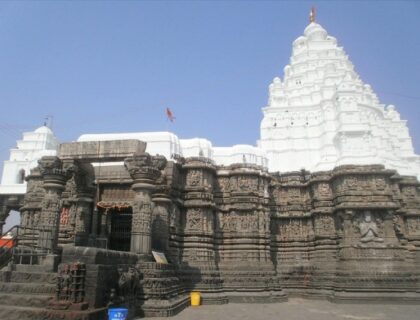
The Grushneshwar Jyotirlinga Mandir is constructed of black stone on a 44,000 sq ft area and features numerous sculptures and fine designs on its interior and exterior walls. A Jyotirlinga murti can be found in the mandir’s Garbhgruh, and a large murti of Shivaji’s favourite Bhakt Nandi can be found in front of the main door. The temple was restored three times, the first time by Maloji Bhosale, Shivaji’s grandfather, in the 16th century. The current temple, which was built in 1730 by Malhar Rao Holkar’s wife Gautami Bai Holkar and later restored by Ahilyabai Holkar, was the last major restoration work completed.

Grishneshwar Jyotirling Mandir or Grushneshwar Temple

The shikara, or spire, of the red rock temple has five levels. You can see the Dashavatars (ten symbols) of Lord Vishnu carved in red stone. On the 24 pillars of the court hall, you’ll find carvings of Lord Shiva from various stories and legends. The sanctum houses the east-facing linga. There is also a statue of Nandi, Lord Shiva’s mount, in the court hall.

Facts about Grishneshwar Jyotirling

  • The Grishneshwar Jyotirling is a nationally protected site located one and a half kilometres from the Ellora Caves, a UNESCO World Heritage Site. It is 30 kilometres north-west of Sambhaji Nagar and 300 kilometres east-northeast of Mumbai.
  • Grishneshwar Jyotirling is also called Ghushmeshwar and Kusumeshwar.
  • Grushneshwar Jyotirling is one of the 12 Jyotirling Temples of the Hindu religion, It is mentioned in Shivapuran, Skandpuran, Ramayan and Mahabharata.
  • It is believed that Lord Shiva himself visited these places and hence they have a special place in the hearts of devotees.
  • The Grishneshwar Jyotirling Temple was destroyed by the Mughal Invader in the 13th-14th centuries AD. In the 16th century AD, Maratha ruler Shivaji’s grandfather, Maloju Bhisale of Verul, reconstructed the temple.
  • The sanctum sanctorum includes Lord Grishneshwar and his consort Grishneshwari.
  • The temple is significant because pilgrims believe that by visiting the Grishneshwar temple, they can reap the benefits of worshipping all 12 Jyotirlingas. The Grishneshwar temple is also said to be a classic example of pre-historic architecture with beautiful carvings.
  • Men are required to go bare-chested into the temple.
  • In the temple murals and carvings, devotees can see the Lord and his consort’s marriage scene. The Grishneshwar temple also has a well from which holy water flows.

Famous Festivals In Grishneshwar Jyotirling

  • Mahashivaratri: The Maha Shivaratri festival is a grand event at Grishneshwar temple, as it is at all important Shiva temples. It is the main festival in town. Every year, millions of devotees flock to this town to catch a glimpse of the Lord on this auspicious day, which falls in February/March.
  • Ganesh Chaturthi: Dedicated to Lord Ganesh, this festival is celebrated in August / September
  • Durga Puja. (Winter) – Devotees celebrate Navaratri at this temple in the month of Ashwin (Sep-Oct) as well as celebrate the triumph of the Goddess Durga over the buffalo demon (Mahishasura).
  • Navaratri. (Summer) – They celebrate other Navaratri in the fortnight of the Chaitra (March-April). Every nine days they worship Navadurga (nine Durgas).

How to Reach Grishneshwar Jyotirling

You can go to this spiritual location at any time of the year, it’s best to go there in the winter, between October and March. During Mahashivratri, a devotee’s ultimate treat would be to visit this divine and ancient location!

By Air: Chhatrapati Sambhaji (Aurangabad) Airport is a nearby Airport and it is nearly 37 kilometres from Grishneshwar Jyotirling.

By Rail: Chhatrapati Sambhaji Nagar (Aurangabad) Railway Station is near the Railway Station and is nearly 29 kilometres from Grishneshwar Jyotirling Temple.

By Road: Chhatrapati Sambhaji Nagar (Aurangabad) is well connected to most of the cities. Local transport is available in plenty.

Also Read –  Trimbakeshwar Jyotirlinga

Read More

Support Us

If our content helps you even 1% in gaining information about the temple, please support us by contributing any amount, our UPI ID is - q417999792@ybl Or pay using QR CODE >>> Click Now

Location

Facilities

  • Drinking Water
  • Pooja Item Shops
  • Prasad Shops
  • Restaurants Nearby
  • Resting Room
Share

Open Now

Friday 5 AM - 11 PM
Saturday 5 AM - 11 PM
Sunday 5 AM - 11 PM
Monday 5 AM - 11 PM
Tuesday 5 AM - 11 PM
Wednesday 5 AM - 11 PM
Thursday 5 AM - 11 PM
Address: Grishneswar Jyotirlinga Temple, Verul, Maharashtra, India
Phone: 02437244585Call Now
Share
View Details

Open Now

Friday 5 AM - 11 PM
Saturday 5 AM - 11 PM
Sunday 5 AM - 11 PM
Monday 5 AM - 11 PM
Tuesday 5 AM - 11 PM
Wednesday 5 AM - 11 PM
Thursday 5 AM - 11 PM
Address: Grishneswar Jyotirlinga Temple, Verul, Maharashtra, India
Phone: 02437244585Call Now
Share

Rameshwaram Jyotirling

Ramnath or Rameshwaram Jyotirling or Ramanathaswamy temple is one of the 12 Jyotirling Temples of Lord Shiva and is located on Rameshwaram Island in Tamil Nadu. Rameswaram Jyotirling is one of the primary places of worship for Lord Shiva Devotees and is one of the Biggest Temple complexes in the world.

The Rameshwaram Jyotirling temple is one of the Char Dhams Temples which are very sacred for Hindu devotees. It is located in the Ramnathapuram district of Tamil Nadu. Jyotirling arranged in Rameswaram temple is one of Bhagwan Shiva’s 12 Jyotirling, and Rameshwaram is regarded as the 11th Jyotirling. The corridor of this temple is very beautiful, displaying ancient Indian art and civilization. The Rameswaram Temple is one of India’s historic temples, and devotees travel from all over the world to learn about its magnificence and history.

The story behind Rameshwaram Jyotirling

According to legend, Lord Rama worshipped Lord Shiva on his way back from Lanka after defeating Ravana, the demon king. Lord Rama prayed to Lord Shiva to atone for the sin of murdering Ravana, a Brahmin and ardent Shiva devotee. He sent Lord Hanuman to Lord Shiva’s home, Mount Kailash, to bring the linga because there was no Shiva shrine there.

Rameshwaram Jyotirling or Ramanathaswamy temple

However, Lord Hanuman was unable to return in time for the puja, so Goddess Sita built a linga out of the sand, the Ramalinga, which Lord Rama revered. Hanuman was dissatisfied that Rama had not waited for his linga when he returned. To appease Hanuman, Rama instructed his followers to worship the linga Hanuman had brought, which he named the Vishwalinga, before the Ramalinga.

History of Rameshwaram Jyotirling

The Rameshwaram Jyotirling in its current form is thought to date from the 17th century, while Fergusson believes the small vimana in the west corridor dates from the 11th or 12th centuries. King Kizhavan Sethupathi or Raghunatha Kilavan is said to have authorised the temple’s construction. The Jaffna kings of the Pandya Dynasty made significant contributions to the temple. To renovate the temple’s sanctum sanctorum, King Jeyaveera Cinkaiariyan (1380-1410 CE) shipped stone blocks from Koneswaram temple in Trincomalee.

Gunaveera Cinkaiariyan (Pararacacekaran V), a trustee at Rameswaram who oversaw the structural development of this temple as well as the promotion of Saivite beliefs, donated a portion of his revenue to Koneswaram. The enormous sums spent during Pradani Muthirulappa Pillai’s tenure towards the restoration of the deteriorating pagodas and the magnificent Chockattan Mantapam or the cloistered precincts of the temple at Rameswaram that he eventually completed are especially noteworthy.

Rameshwaram Jyotirling or Ramanathaswamy temple

Sri Lanka’s rulers also contributed to the temple’s construction; Parakrama Bahu (1153-1186 CE) was involved in the temple’s sanctum sanctorum construction. In addition, Sri Lankan king Nissanka Malla contributed to the temple’s development through donations and the dispatch of workers.

In (1667 CE), Perumal Servaikaran, son of Sokkappan Servaikarar of Pandiyur, donated Pappakudi as a grant to Rameshwaram Temple and one Deva Venkala Perumal Ramanathar. In the Ramnad Kingdom, they are local chieftains under Tirumalai Regunatha Sethupathy Thevar Rein. Government Press, Madras Presidency published the grant details for the Archaeological Survey of India in 1885.

Along with Pappakudi, the villages of Anandur and Urasur have been donated to Rameshwaram Temple. These villages are located in the Melaimakani Seermai province of the Radhanallur Division.

Source – Wikipedia

Architecture of Rameshwaram Jyotirling

The Rameshwaram Jyotirling primary deity is Ramanathaswamy (Shiva) in the form of a lingam. Inside the sanctum, there are two lingams: one built by Rama from sand and residing as the main deity, known as the Ramalingam, and one brought by Hanuman from Kailash, known as the Vishvalingam. Rama is said to have ordered that the Vishvalingam be worshipped first because it was brought by Hanuman – a tradition that continues to this day.

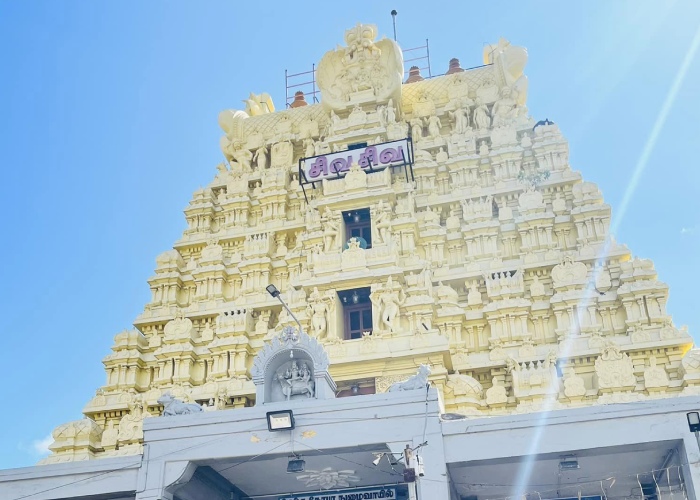
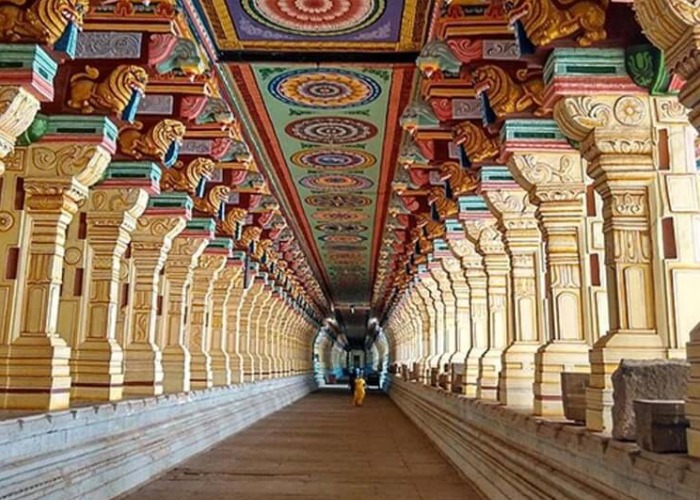
There is a high compound wall (madil) on all four sides of the temple premises, measuring about 865 feet furlong from east to west and 657 feet furlong from north to south, with huge towers (Gopurams) to the east and west and finished gate towers to the north and south. The temple’s interior features long corridors that run between massive colonnades on platforms more than five feet high.

Rameshwaram Jyotirling or Ramanathaswamy temple

The second corridor is made up of sandstone pillars, beams, and a ceiling. The intersection of the third corridor on the west and the paved path leading from the western gopuram to the Setumadhava shrine forms a unique structure in the shape of a chess board, popularly known as Chokkattan Madapam, where the Utsava deities are adorned and kept during the Vasanthotsavam (Spring festival) and the 6th-day festival in Adi (July-August) and Masi (February-March).

A separate temple for Parvati, known as the Parvatavardhini temple, is located near Rameshwar’s main temple. Aside from that, there are temples dedicated to Santana Ganapati, Veerabhadra Hanuman, navagrahas, and other deities. Gandhamaadhan mountain is located approximately 2 kilometres from the main temple. Despite being a sandy area, it is lush and green, with a diverse flora. This is Rameshwar’s Nandanavan.

Facts about Rameshwaram Jyotirling

  • Rameshwaram Jyotirling is one of the four major char dham sites, along with Dwaraka in Odisha, Badrinath in Uttarakhand, and Puri in Odisha.
  • Rameshwaram Jyotirlinga gets its name because Lord Rama worshipped Lord Shiva in this spot.
  • The Ramayana says that Rama built the Ram Setu Bridge to get to Sri Lanka and save Sita from Ravana. This bridge connects mainland India and Sri Lanka.
  • Rameshwaram Jyotirling, which covers an area of 15 acres, is a prime example of Dravidian architecture.
  • The Pamban Bridge is a railway bridge that spans the Palk Strait and connects the Pamban Island town of Rameshwaram to India’s mainland.
  • There are sixty-four Tīrthas (holy water bodies) in and around the island of Rameswaram, Tamil Nadu, India. According to Skānda Purāṇa, twenty-four of them are important.
  • The Rameshwaram Jyotirling is one of the holiest Hindu Char Dham (four divine sites) sites comprising Badrinath, Jagannath PuriDwarkadhish and Rameshwaram Jyotirling.

Famous Festivals In Rameshwaram Jyotirling

  • Mahashivaratri: The Maha Shivaratri festival is a grand event at Rameshwaram Jyotirling Temple, as it is at all important Shiva temples. It is the main festival in town. Every year, millions of devotees flock to this town to catch a glimpse of the Lord on this auspicious day, which falls in February/March.
  • Ganesh Chaturthi: Dedicated to Lord Ganesh, this festival is celebrated in August / September
  • Durga Puja. (Winter) – Devotees celebrate Navaratri at this temple in the month of Ashwin (Sep-Oct) as well as celebrate the triumph of the Goddess Durga over the buffalo demon (Mahishasura).
  • Navaratri. (Summer) – They celebrate other Navaratri in the fortnight of the Chaitra (March-April). Every nine days they worship Navadurga (nine Durgas).

How to Reach Rameshwaram Jyotirling

By Air:  The nearest airport is at Madurai, at a distance of 154 km

By Rail: Rameswaram Railway Station (RMM) at a distance of nearly 1 kilometre from Rameswaram Temple.

By Road: State buses run from the railway station to various locations in and around Rameshwaram. Taxis, auto-rickshaws, cycle-rickshaws and tongas are available for local transportation. On the island, there is also a city bus service.

Also Read – Trimbakeshwar Jyotirling

Read More

Support Us

If our content helps you even 1% in gaining information about the temple, please support us by contributing any amount, our UPI ID is - q417999792@ybl Or pay using QR CODE >>> Click Now

Location

Facilities

  • Drinking Water
  • Pooja Item Shops
  • Prasad Shops
  • Restaurants Nearby
  • Resting Room
Frequently Asked Questions

Temple Open and Close Timing
Morning: 05:00 am to 01:00 pm

Evening: 03:00 pm to 09:00 pm.

Primary deity:
Ramanathaswamy (Shiva).
Best Time to visit
October to March.
Share

Open Now

Friday 5 AM - 9 PM
Saturday 5 AM - 9 PM
Sunday 5 AM - 9 PM
Monday 5 AM - 9 PM
Tuesday 5 AM - 9 PM
Wednesday 5 AM - 9 PM
Thursday 5 AM - 9 PM
Address: Arulmigu Ramanathaswamy Temple, Rameswaram, Tamil Nadu, India
Phone: 04573221223Call Now
Website: https://rameswaramramanathar.hrce.tn.gov.in/hrcehome/index_temple.php?tid=35671 Visit the site
Share
View Details

Open Now

Friday 5 AM - 9 PM
Saturday 5 AM - 9 PM
Sunday 5 AM - 9 PM
Monday 5 AM - 9 PM
Tuesday 5 AM - 9 PM
Wednesday 5 AM - 9 PM
Thursday 5 AM - 9 PM
Address: Arulmigu Ramanathaswamy Temple, Rameswaram, Tamil Nadu, India
Phone: 04573221223Call Now
Website: https://rameswaramramanathar.hrce.tn.gov.in/hrcehome/index_temple.php?tid=35671Visit the site
Share

Trimbakeshwar Jyotirling

Shri Trimbakeshwar Jyotirling Temple is one of the 12 Jyotirling temples located in Trimbak, Trimbakeshwar tehsil, Nashik District, Maharashtra, India, 28 kilometres from Nashik and 40 kilometres from Nashik road. Trimbakeshwar Jyotirlinga is the only shivling of 12 that honours not only Lord Shiva but also Lord Vishnu and Lord Brahma, the other two gods who comprise the Holy Trinity.

Trimbakeshwar Town is an ancient Hindu pilgrimage site and is the source of the Godavari River, the longest river in peninsular India. This Jyotirlinga is distinguished by its three faces, which represent Tridev – Lord Bramha, Lord Vishnu, and Lord Shiva. This shrine is surrounded by the hills of Brahmagiri, Nilagiri, and Kalagiri.

The story behind Trimbakeshwar Jyotirling

According to legend, Gautama the Rishi and his wife Ahalya resided atop the Brahmagiri hills. In the rishi’s ashram, there were plenty of food grains although there was hunger everywhere else on the planet. This happened as a result of the gods favouring him as a result of his unwavering dedication and consistent prayers. The other rishis sent a cow into his fields because they were jealous of him.

Trimbakeshwar Jyotirling

The cow died as a result of Gautama’s attempts to scare it away from his crops. Gautama worshipped Lord Shiva and asked him to let the Ganga River flow into his ashram to purify it for the sin of murdering a cow. When Lord Shiva saw his dedication, he released Ganga and instructed her to remain. The Godavari originates at the present-day Kushavarta or sacred pond. The Godavari is revered by worshippers as Ganga.

History of Trimbakeshwar Jyotirling

In the 18th century, the Maratha ruler Nana Saheb Peshwa built the current Trimbakeshwar temple. Later, Shreemant Rao Saheb improved the approach to the tank by extending the Trimbakeshwar temple around the Kushavarta Kund.

Trimbakeshwar Jyotirling

Devotees believe that after Lord Brahma lied to Lord Shiva about finding the end of Lord Shiva’s endless pillar of fire, Lord Shiva cursed Lord Brahma and cursed devotees not to worship him. This enraged Lord Brahma, who cursed Lord Shiva as a result. This drove Lord Shiva underground. As a result, Lord Shiva’s Linga in Trimbakeshwar is now beneath the ground.

Architecture of Trimbakeshwar Jyotirling

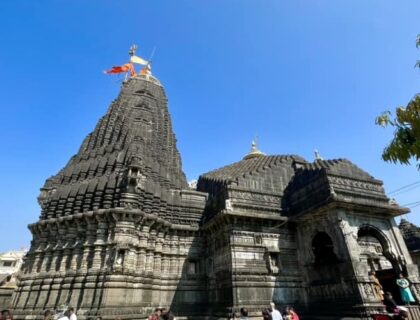
The temple is surrounded by three hills: Brahmagiri, Nilagiri, and Kalagiri. Three lingas (an iconic form of Shiva) represent Shiva, Vishnu, and Brahma in the temple. The temple tank is called Amritavarshini, and it measures 28 metres by 30 metres. Other bodies of water include Bilvatirtha, Viswanantirtha, and Mukundatirtha. Ganga, Jaleswara, Rameswara, Gautameswara, Kedarnatha, Rama, Krishna, Parashurama, and Lakshmi Narayana are among the deities depicted. There are also several monasteries and saints’ samadhis at the temple.

Trimbakeshwar Jyotirling

There are entry gates on all four sides, viz. East, West, South and North. As per spiritual conceptions the direction East denotes the beginning, the West denotes maturity, the South denotes fulfilment or completion and the North stands for revelation. The entire temple was built with black stone.

The three faces of the jyotirlinga, which depict the gods Shiva, Vishnu, and Brahma, are the temple’s defining features. They are all present in the hollow space of the Shivalinga. Trimbakeshwara (Three Lords) was born as a result. They wear a crown made of jewels that is said to have been made during the Pandavas’ reign.

Facts about Trimbakeshwar Jyotirling

  • Trimbakeshwar Jyotirlinga is one of 12 jyotirlingas in India that honour not only Lord Shiva but also the other two gods of the Holy Trinity, Lord Vishnu and Lord Brahma.
  •  The Jyotirling are covered by a jewelled crown which is placed over the Gold Mask of Trideva (Brahma Vishnu Shiva).
  • The crown is said to be from the Pandava era and is made of diamonds, emeralds, and other precious stones. Every Monday from 4-5 p.m., the crown is on display.
  • The entire black stone temple is known for its appealing architecture and sculpture and is located at the foothills of the Brahmagiri mountain. The Brahmagiri mountain is the source of three Godavari rivers.
  • This location is well-known for its numerous religious rituals (vidhis). Narayan Nagbali, Kalsarpa Shanti, and Tripindi Vidhi have all been completed here. Trimbakeshwar is the only place where Narayan Nagbali puja is performed.
  • The temple’s Shiva deity was made up of the world-famous Nassak Diamond. It was looted by the British during the Third Anglo-Maratha War and has since been owned by one of two people. The diamond is currently in the possession of Edward J. Hand, a trucking company executive from Greenwich, Connecticut, USA.
  • Visiting this ancient and divine site during Mahashivratri would be the ultimate treat for any devotee!
  • Devotees believe that a visit to this temple will wash away their sins.
  • The famous pilgrimage festival, Kumbh Mela, occurs here once every 12 years.

Famous Festivals In Trimbakeshwar Jyotirling

  • Mahashivaratri: The Maha Shivaratri festival is a grand event at Trimbakeshwar Jyotirling, as it is at all important Shiva temples. It is the main festival in town. Every year, millions of devotees flock to this town to catch a glimpse of the Lord on this auspicious day, which falls in February/March.
  • Ganesh Chaturthi: Dedicated to Lord Ganesh, this festival is celebrated in August / September
  • Durga Puja. (Winter) – Devotees celebrate Navaratri at this temple in the month of Ashwin (Sep-Oct) as well as celebrate the triumph of the Goddess Durga over the buffalo demon (Mahishasura).
  • Navaratri. (Summer) – They celebrate other Navaratri in the fortnight of the Chaitra (March-April). Every nine days they worship Navadurga (nine Durgas).

How to Reach Trimbakeshwar Jyotirling

While you are welcome to visit this spiritual site at any time of the year, it is recommended that you do so between the months of October and March.

By Air: The nearest airport is in Nasik which is 54 km from Trimbakeshwar Jyotirling. The Mumbai Airport is 200 Km from Trimbakeshwar Jyotirling Temple. Regular taxi services run to Trimbakeshwar Jyotirling Temple.

By Rail: The nearest station is Nasik which is 29.5 km from the Trimbakeshwar Jyotirling Temple.

By Road: Bus and taxi services from Nagpur, Mumbai, Pune etc. are always available from these cities. You Can hardly Pay Rs 300 – Rs 1000 to reach from these cities.

Also Read –  Grishneshwar Jyotirling Mandir

Read More

Support Us

If our content helps you even 1% in gaining information about the temple, please support us by contributing any amount, our UPI ID is - q417999792@ybl Or pay using QR CODE >>> Click Now

Location

Facilities

  • Drinking Water
  • Pooja Item Shops
  • Prasad Shops
  • Restaurants Nearby
  • Resting Room
Frequently Asked Questions

Is there VIP darshan also
Yes , 250 Per Person
Best Time to Visit
June To Aug 
In which city it is located
Nashik 
Temple opening and closing time
5.30 AM To 9 PM
Share

Open Now

Friday 5 AM - 9 PM
Saturday 5 AM - 9 PM
Sunday 5 AM - 9 PM
Monday 5 AM - 9 PM
Tuesday 5 AM - 9 PM
Wednesday 5 AM - 9 PM
Thursday 5 AM - 9 PM
Address: Trimbakeshwar Jyotirling Mandir, Trimbak, Maharashtra, India
Phone: +912594233215Call Now
Website: https://www.trimbakeshwartrust.com/ Visit the site
Follow Us:
Share
View Details

Open Now

Friday 5 AM - 9 PM
Saturday 5 AM - 9 PM
Sunday 5 AM - 9 PM
Monday 5 AM - 9 PM
Tuesday 5 AM - 9 PM
Wednesday 5 AM - 9 PM
Thursday 5 AM - 9 PM
Address: Trimbakeshwar Jyotirling Mandir, Trimbak, Maharashtra, India
Phone: +912594233215Call Now
Website: https://www.trimbakeshwartrust.com/Visit the site
Follow Us:
Share

Omkareshwar Jyotirling

Omkareshwar Jyotirling is a Hindu temple dedicated to Shiva located in Mandhata, near Khandwa city in the Khandwa district of Madhya Pradesh, India. It is one of Shiva’s twelve Jyotirlinga shrines. It is located on the island of Mandhata, near Khandwa city in the Narmada district of Madhya Pradesh, India; the shape of the island is said to resemble the Devanagari symbol ॐ.

There are two main Shiva temples located at this particular spot, one on the island dedicated to Omkareshwar (whose name means “Lord of Omkara or the Lord of the Om sound”) and one on the mainland dedicated to Mamleshwar (Amaleshwar) (whose name means “Immortal Lord” or “Lord of the Immortals or Devas”).

The story behind Omkareshwar Jyotirling

According to legend, Vindhya Mountain was once provoked by the sage Narada. Vindhya was determined to prove Narada wrong and began strict penance in order to please Lord Shiva. For six months, the mountain performed strict penance on the banks of the Narmada, where Onkareshwar Linga was located. Lord Shiva appeared to him, pleased with his austerity, and asked him to ask for a boon. Following Lord Shiva’s words, the Vindhyachal prayed to God for wisdom.

Omkareshwar Jyotirling

At the same time, Vindhya asked lord shiva to be established in this location for all eternity. Lord Shiva divided the linga into two parts at the request of the gods and sages, one at Omkareshwar and the other at Amareshwar or Mamleshwar. As a result, devotees visit both temples when they visit Mandhata.

History of Omkareshwar Jyotirling

This holy spot is described as a spiritual and inhabited location in the Puranas. Nobody knows when this historic temple was originally built. The earliest evidence, however, indicates that in 1063, King Udayaditya installed four stone inscriptions, each with a Sanskrit Stotra. Raja Bharat Singh Chauhan renovated the temple and built a palace nearby in 1195.

Omkareshwar jyotirling 1

The indigenous Bhil chieftains ruled Omkareshwar from 10 to 13 AD under the Parmar rulers of Malwa. The Marathas took control during the 18th century AD when many temples were built and renovated.

Omkareshwar Jyotirling Temple is said to be the location where Adi Shankara met his guru Govinda Bhagavatpada in a cave. Even today, this cave can be found just below the Shiva temple, where an image of Adi Shankara has been installed.

Architecture of Omkareshwar Jyotirling

The Omkareshwar Jyotirling has a large prayer hall that is supported by approximately 60 massive, ornately carved stone pillars. It is a five-story structure with a different deity on each floor. Above the Omkareshwar linga is the Mahakaleshwar temple. The Sidhnath, Gupteshwar, and Dhwajeshwar temples are located on the third, fourth, and fifth levels, respectively.

The Mamleshwar Temple

Omkareshwar Jyotirlinga’s nature is divided. The Omkareshwar Temple houses one half of the Jyotirlinga, while the Mammaleshwar Temple houses the other. Pilgrims must visit both of these temples to see the entire Jyotirlinga. The Jyotirlingas are Swayambhu, which means they are self-created.

Omkareshwar Jyotirling Temple

Facts about Omkareshwar Jyotirling

  • Omkareshwar Jyotirling is located in the city of Mandhata (also known as Omkareshwar) in the Khandwa district of the Indian state of Madhya Pradesh. It is approximately 16 kilometres from Barwaha, Madhya Pradesh.
  • Two Shiva temples, Amareshwar Jyotirlinga on the mainland and Omkareshwar on an island are close to each other and popular pilgrimage destinations for devotees.
  • Mandhata Island, where Omkareshwar Jyotirlinga is located, is said to be shaped like the sacred Om (ॐ).
  • Omkareshwar is formed by the sacred Narmada river. This is one of India’s most sacred rivers, and it is now the site of one of the world’s largest dam projects.
  • The Omkareshwar Jyotirling Temple is located on the island of Mandhata or Shivpuri, on the banks of the Narmada and the Kaveri River (a tributary of the Narmada). The island is 4 kilometres long and 2.6 km2, and it can be reached by boat or bridge.
  • There are sanctums to Panchamukhi Ganesha, and Annapoorani housed inside this temple.
  • Being one of the major pilgrimage centres in Madhya Pradesh, Omkareshwar celebrates a few festivals with great enthusiasm.

Famous Festivals In Omkareshwar Jyotirling

  • Mahashivaratri: The Maha Shivaratri festival is a grand event at Omkareshwar Jyotirling Temple, as it is at all important Shiva temples. It is the main festival in town. Every year, millions of devotees flock to this town to catch a glimpse of the Lord on this auspicious day, which falls in February/March.
  • Ganesh Chaturthi: Dedicated to Lord Ganesh, this festival is celebrated in August / September
  • Durga Puja. (Winter) – Devotees celebrate Navaratri at this temple in the month of Ashwin (Sep-Oct) as well as celebrate the triumph of the Goddess Durga over the buffalo demon (Mahishasura).
  • Navaratri. (Summer) – They celebrate other Navaratri in the fortnight of the Chaitra (March-April). Every nine days they worship Navadurga (nine Durgas).

How to Reach Omkareshwar Jyotirling

By Air: Devi Ahilyabhai Holkar Airport, Indore is the nearest airport which is about 82 km from Omkareshwar Jyotirling Temple.

By Rail: Omkareshwar Mortakka Railway Station is 12 km from the temple.

By Road: Mortakka Bus Stand is the nearest Bus stand. The temple is located at a distance of about approx 12 km from the bus stand.

Read More

Support Us

If our content helps you even 1% in gaining information about the temple, please support us by contributing any amount, our UPI ID is - q417999792@ybl Or pay using QR CODE >>> Click Now

Location

Facilities

  • Drinking Water
  • Pooja Item Shops
  • Prasad Shops
  • Restaurants Nearby
  • Resting Room

Frequently Asked Questions

In which city it is located
District Khandwa, Tehasil Punasa, Omkareshwar, Madhya Pradesh 450554,
Temple pening and closing time
Morning 4.00 am to 9.30 pm.
Best Season to visit this temple.
Best season is from July to March and April to June are very hot
Share

Open Now

Friday 4 AM - 9 PM
Saturday 4 AM - 9 PM
Sunday 4 AM - 9 PM
Monday 4 AM - 9 PM
Tuesday 4 AM - 9 PM
Wednesday 4 AM - 9 PM
Thursday 4 AM - 9 PM
Address: Shri Mamleshwar Jyotirlinga, Omkareshwar, Madhya Pradesh, India
Phone: +9107280271228Call Now
Website: https://shriomkareshwar.org/ Visit the site
Follow Us:
Share
View Details

Open Now

Friday 4 AM - 9 PM
Saturday 4 AM - 9 PM
Sunday 4 AM - 9 PM
Monday 4 AM - 9 PM
Tuesday 4 AM - 9 PM
Wednesday 4 AM - 9 PM
Thursday 4 AM - 9 PM
Address: Shri Mamleshwar Jyotirlinga, Omkareshwar, Madhya Pradesh, India
Phone: +9107280271228Call Now
Website: https://shriomkareshwar.org/Visit the site
Follow Us:
Share

Baidyanath Jyotirling

The Baidyanath Jyotirling temple also known as Baba Baidyanath Dham is a Hindu temple dedicated to Lord Shiva located in Deoghar, in the Santhal Parganas division of the Indian state of Jharkhand. It is one of the 12 Jyotirlingas Temples and is regarded as the most revered location where Shiva resides.

The temple complex includes the central shrine of Baba Baidyanath, which houses the revered Dham, as well as 21 other temples. Devghar is also known as Baidyanath Dham or Baba Dham due to its status as a holy pilgrimage. The main temple features a pyramidal tower with three compactly placed gold vessels. These were given to the Maharaja of Giddhaur, Raja Puran Singh. There are also five trident-shaped knives (Punchsula) and a lotus jewel with eight petals called Chandrakanta Mani.

The story behind Baidyanath Jyotirling

According to legend, Ravana was performing penance in the Himalayan region to appease Lord Shiva. He presented Lord Shiva with nine of his heads as an offering. Lord Shiva appeared before him as he was about to sacrifice his tenth head and expressed satisfaction with the offering. Shiva then asked what boon he desired. Ravana requested that the “Kamna Linga” be transported to the island of Lanka and expressed his desire to transport Lord Shiva from Kailash to Lanka.

Lord Shiva granted Ravana’s request but on one condition. He claimed that if the lingam was placed en route, it would become the deity’s permanent abode and could never be moved.

Baidyanath Jyotirling

When the celestial gods learned that Lord Shiva had left his abode on Mount Kailash, they became concerned. They went to Lord Vishnu for help. Then Lord Vishnu asked Varuna, the water deity, to enter Ravana’s stomach via achamana, a ritual that involves sipping water from one’s palm. Ravana left for Lanka with the lingam and felt the need to urinate near Deoghar as a result of performing Achaman.

Then Lord Vishnu took the form of a cowherd named Baiju. Ravana gave this lingam to the cowherd while he went to urinate. Baiju set the lingam down on the ground. When Ravana returned, he attempted to displace the lingam but was unsuccessful. He became agitated and pressed his thumb against the lingam before leaving. Brahma, Vishnu, and other deities then worshipped the Shiva lingam. Since then, Mahadev has lived in Deoghar as the Kamna Linga’s embodiment.

History of Baidyanath Jyotirling

This entire area of Deoghar was ruled by the Kings of Gidhaur, who were deeply attached to this temple. In 1266, Raja Bir Vikram Singh established this princely state. Following the Battle of Plassey in 1757, officers of the East India Company focused their attention on this temple. Keating, an Englishman, was sent to investigate the temple’s administration. Mr. Keating, the first English collector of Birbhum, became involved in temple administration.

Under Mr. Keating’s orders, Mr. Hesilrigg, his assistant and possibly the first Englishman to visit the holy city, set out to personally supervise the collection of pilgrim offerings and dues in 1788. Later, when Mr. Keating himself visited Babadham, he was persuaded and forced to abandon his policy of direct intervention. He handed over complete control of the temple to the high priest.

Baidyanath Jyotirling

The name Deoghar appears to be of recent origin, dating most likely from the construction of Lord Baidyanath’s massive temple. Although the builder’s name is unknown, the temple’s front half is thought to have been constructed in 1596 by Puran Mal, an ancestor of the Maharaja of Giddhour.

Architecture of Baidyanath Jyotirling

The Maa Parvati temple is linked to the main temple by huge red sacred threads that are unique and worthy of reverence, demonstrating Shiva and Shakti’s unity. According to the stories told in the Shiva Purana, the holy Baidyanath temple represents the union of souls and thus is appropriate for Hindu marriage.

Three gold vessels are compactly arranged in a pyramid-shaped tower in the main temple. These were presented by Raja Puran Singh, the Maharaja of Giddhaur. Punchsula, a set of five knives in the shape of a trident, and Chandrakanta Mani, a lotus jewel with eight petals, are also present. There is a huge Nandi, Lord Shiva’s mount, in front of the Lord.

Baidyanath Jyotirling

A large pond is also located near the temple. The main Baba Baidyanath temple is the oldest, and many other temples have been built around it. The Baba Bholenath temple is linked with the Goddess Parvati temple.

Facts about Baidyanath Jyotirling

  • Baidyanath Jyotirlinga is also known as Baidyanath Dham or Baba Dham locally.
  • Jayadurga Shaktipeeth is located on campus, directly across from Vaidyanath’s main temple.
  • Here Sati is worshipped as Jai Durga and Lord Bhairav as Vaidyanath or Baidyanath.
  • Since the heart of Goddess Sati fell here, the place is also called as Haridrapeetha.
  • There is a belief that the couple who binds these two tops with the silk will have a happy family life with the blessings of Lord Shiva and Devi Parvati.
  • Bad or negative thoughts are removed from a person’s brain. The individual gets spiritual growth. Hence, it is called Baidyanath.
  • Every year in the month of Shravan (July-August), thousands of pilgrims flock to the Vaidyanath Dham to pay their respects to Baba Bholenath.
  • Peda is a Deoghar speciality and a local sweet. Babadham has a regular and well-kept office where offerings and donations are accepted.
  • On the Baidyanath Jyotirling, devotees are permitted to perform Abhishek, anointing the linga with water by themselves.

Famous Festivals At Baidyanath Jyotirling

  • Durga Puja. (Winter) – Devotees celebrate Navaratri at this temple in the month of Ashwin (Sep-Oct).
  • Navaratri. (Summer) – They celebrate other Navaratri in the fortnight of the Chaitra (March-April). Every nine days they worship Navadurga (nine Durgas).
  • Diwali – Diwali is one of the most admired and auspicious festivals in the town.
  • Mahashivratri– A grand fair is organized at the temple during the occasion of Maha Shivratri.

How to Reach Baidyanath Jyotirling

Baidyanath Jyotirling is located in Deoghar in the state of Jharkhand.

By Air: The nearby Airport is Simra (Deoghar) Airport and it is about 8 km from the Baidyanath Jyotirling temple.

By Railway: Deoghar Junction is the nearby railway station and it is about 3 km from the temple. Also, Jasidih Junction is a major halt where most trains stop which is 5 km from the temple.

By Roadways: The roads of Jharkhand are easily connected to the other parts of the country.

Also Read – Omkareshwar Jyotirling


Read More

Support Us

If our content helps you even 1% in gaining information about the temple, please support us by contributing any amount, our UPI ID is - q417999792@ybl Or pay using QR CODE >>> Click Now

Location

Facilities

  • Drinking Water
  • Pooja Item Shops
  • Prasad Shops
  • Restaurants Nearby
  • Resting Room
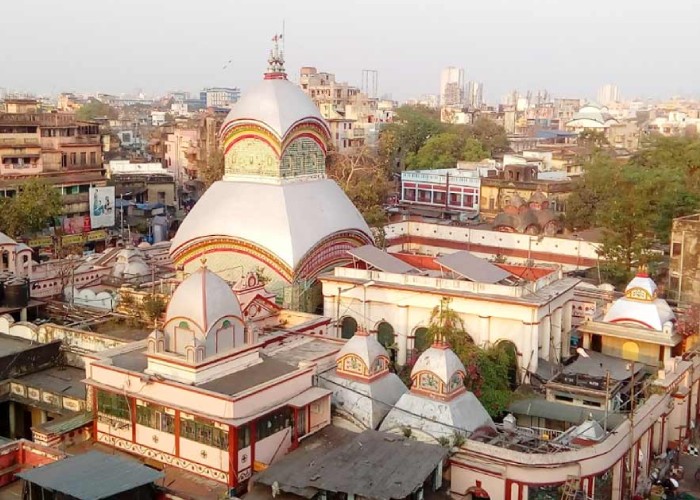
Frequently Asked Questions

When Door (Patt) Open
04:00 hrs.
In which district it is located
It is located in Deoghar District of state Jharkhand
How many temples are there in the complex
There are about 22 temples in the complex. This Place is also called as Deoghar means Homes To God.
Share

Open Now

Friday 4 AM - 8 PM
Saturday 4 AM - 8 PM
Sunday 4 AM - 8 PM
Monday 4 AM - 8 PM
Tuesday 4 AM - 8 PM
Wednesday 4 AM - 8 PM
Thursday 4 AM - 8 PM
Address: Baba Baidyanath Dham Temple, Shivganga Muhalla, Deoghar, Jharkhand, India
Phone: +916432232295Call Now
Website: https://babadham.org/ Visit the site
Share
View Details

Open Now

Friday 4 AM - 8 PM
Saturday 4 AM - 8 PM
Sunday 4 AM - 8 PM
Monday 4 AM - 8 PM
Tuesday 4 AM - 8 PM
Wednesday 4 AM - 8 PM
Thursday 4 AM - 8 PM
Address: Baba Baidyanath Dham Temple, Shivganga Muhalla, Deoghar, Jharkhand, India
Phone: +916432232295Call Now
Website: https://babadham.org/Visit the site
Share

Bhimashankar Jyotirling

Bhimashankar Jyotirling is an old holy place and is one of the 12 jyotirlingas, Lord Shiva’s most sacred shrines located on the Sahyadri slopes in Maharashtra. It is located in the Ghat region of the Sahyadri Mountains. Bhimashankar Jyotirling is among the twelve Jyotirlingas arranged all over India.

It is located 50 kilometres northwest of Khed taluka (also known as Rajgurunagar) in the village of Bhojgiri in Maharashtra, India. The river Bhima, which flows southeast and joins the Krishna near Raichur, originates in Bhmshankar as well.

The story behind Bhimashankar Jyotirling

According to legend, an asura (demon) named Bhima and his mother Karkati lived in the Dakini forests on the ranges of the Sahyadri Mountains. He was, in fact, the son of King Ravana’s younger brother, Kumbharkarna. He was furious when he discovered that Lord Vishnu had murdered his father while he was Rama. To appease Lord Brahma, he vowed vengeance and underwent severe penance.

Bhimashankar Jyotirling

In return, Brahma bestowed upon him tremendous strength, which he utilized to terrorize the entire world. He demanded that Kamrupeshwar, a fervent devotee of Lord Shiva, pray to him rather than Shiva when he imprisoned him. Bhima used his sword to kill the Shivalinga when Kamrupeshwar refused. That’s when Lord Shiva showed up in front of him and burned him to ashes. The Shivalinga is believed to be located where Lord Shiva manifested himself.

History of Bhimashankar Jyotirling

The old temple is said to have been constructed on a Swayambhu Lingam, also known as the self-emanating Shiva Lingam. Furthermore, the Lingam is clearly located in the centre of the temple’s Garbagriham (Sanctum sanctorum). The temple’s pillars and door frames are adorned with intricate sculptures of holy beings and people. These incredible carvings depict scenes from sacred textbooks.
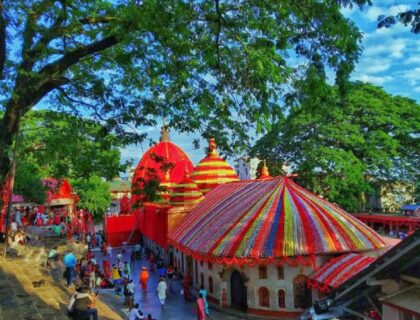
Bhimashankar Jyotirling

The Bhimashankar Jyotirling is a showcase for the stone workers of Vishwakarma. It was constructed in the 13th century. The Maratha empire’s statesman Nana Phadnavis built structures like the shikhara, or spires, in the 18th century. It is also believed that the endowments of the Maratha ruler, Chhatrapati Shivaji Maharaj, made it easier to worship here.

Architecture of Bhimashankar Jyotirling

Bhimashankar’s architectural style is distinguished by the use of the Nagara style, which is common in northern India. The architectural style is similar to the Hemadpanthi style, which is popular in the Deccan region. The old temple is said to have been built on a Swayambhu Shiva Linga.

Furthermore, the Ling can be seen to be precisely in the centre of the temple’s Garbhagriha (Sanctum sanctorum). The garbhagriha and antarala are built with indigenous stone in the Indo-Aryan architectural style, which is also found in Jain temples. The temple’s pillars and door frames are adorned with intricate carvings of deities and human figures.
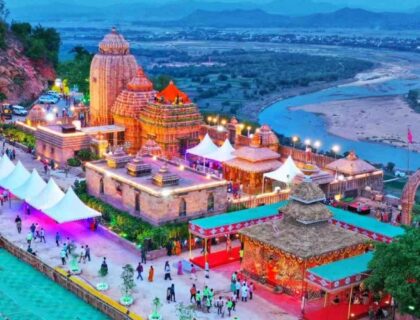
Bhimashankar Jyotirling

The sanctum of the Bhimashankar Sanctuary is on a lower level and is comprised of both old and new Nagara-style structures. It exemplifies the extraordinary skill of the ancient Vishwakarma sculptors. The temple was built in the thirteenth century. The Sabha mandap was constructed by Nana Phadnavis in the 18th century. He also created and constructed the shikhara. This temple was funded by Chattrapati Shivaji Maharaj, the Maratha king, to make religious ceremonies easier.

Facts about Bhimashankar Jyotirling

  • The Bhimashankar Mandir is a Jyotirling Temple situated in Bhimashankar village, in the Pune district of Maharashtra.
  • Other temples close to the main temple include Kamalaja mata, an incarnation of Goddess Parvathi who aided Shiva in his battle against Tripurasur.
  • Within the temple grounds, there is a minor shrine dedicated to Lord Shani. In front of the Bhimashankar Shiva Linga is a statue of Nandi.
  • Mokshakund Tirtha is located behind the Bhimashankar temple. Before going to the temple, it is customary to take a bath in the kund.
  • Bhimashankar has a wildlife sanctuary; it is a protected forest area with a variety of plants and animals because it is part of the Western Ghats.
  • The Malabar Giant Squirrel, the state animal of Maharashtra, is a rare animal found here.
  • An enormous antique Portuguese church bell stands between the two pillars in front of the “Shani” shrine.
  • There is a narrow path behind the temple that leads to the riverbanks. Outside the temple, there is a large area of forest that is occasionally broken up by forts on nearby mountains.
  • You can visit it during the colder months, so August to February is a good time to go. It would be ideal to visit this holy site during Mahashivratri.

Famous Festivals In Bhimashankar Jyotirling

  • Mahashivaratri: The Maha Shivaratri festival is a grand event at Bhimashankar Jyotirling, as it is at all important Shiva temples. It is the main festival in town. Every year, millions of devotees flock to this town to catch a glimpse of the Lord on this auspicious day, which falls in February/March.
  • Ganesh Chaturthi: Dedicated to Lord Ganesh, this festival is celebrated in August / September
  • Durga Puja. (Winter) – Devotees celebrate Navaratri at this temple in the month of Ashwin (Sep-Oct) as well as celebrate the triumph of the Goddess Durga over the buffalo demon (Mahishasura).
  • Navaratri. (Summer) – They celebrate other Navaratri in the fortnight of the Chaitra (March-April). Every nine days they worship Navadurga (nine Durgas).

How to Reach Bhimashankar Jyotirling

By Air: Pune (Lohgaon) is 125 km from the Bhimashankar Jyotirling Temple.

By Rail: As there is no direct train from Pune to Bhimashankar. The nearest railway station is Pune. From Pune one has to travel by bus to Bhimashankar

By Road: There are frequent buses available from Pune to Bhimashankar from the Shivajinagar bus stand. Someone can reach to Shivajinagar bus stand, and take the bus to Bhimashankar. Travel time is around 4 hours.

From the Bhimashankar bus stop, there are two options for getting to the temple: either via roadways or stairs. From the Bhimashankar bus stop, approximately 100 steps lead down to the Bhimashankar temple. Those who are unable to climb stairs can use a doli or palanquin.

Also Read – Rameshwaram Jyotirling

Read More

Support Us

If our content helps you even 1% in gaining information about the temple, please support us by contributing any amount, our UPI ID is - q417999792@ybl Or pay using QR CODE >>> Click Now

Location

Facilities

  • Drinking Water
  • Pooja Item Shops
  • Prasad Shops
  • Restaurants Nearby
  • Resting Room

Frequently Asked Questions

When is Darshan Timings
4:30 AM to 9:30 PM
Is entry is free
yes
Best Time to Visit this temple
June To August for nature lovers and in the month of winter season for sugam darshan
Share

Open Now

Friday 4 AM - 9 PM
Saturday 4 AM - 9 PM
Sunday 4 AM - 9 PM
Monday 4 AM - 9 PM
Tuesday 4 AM - 9 PM
Wednesday 4 AM - 9 PM
Thursday 4 AM - 9 PM
Address: Bhimashankar_jyotirlinga, Bhimashankar, Maharashtra, India
Phone: +918888773300Call Now
Share
View Details

Open Now

Friday 4 AM - 9 PM
Saturday 4 AM - 9 PM
Sunday 4 AM - 9 PM
Monday 4 AM - 9 PM
Tuesday 4 AM - 9 PM
Wednesday 4 AM - 9 PM
Thursday 4 AM - 9 PM
Address: Bhimashankar_jyotirlinga, Bhimashankar, Maharashtra, India
Phone: +918888773300Call Now
Share

Shree Kashi Vishwanath Jyotirling

Kashi Vishwanath Jyotirling Temple is a well-known Hindu shrine dedicated to Lord Shiva located in Vishwanath Gali in Varanasi City, Uttar Pradesh, India. The Kashi Vishvanath Jyotirling is one of the twelve Jyotirling temples, or holiest Shiva temples which is located on the western bank of the sacred River Ganga. The temple is denoted as Vishvanatha or Vishveshvara, which means “Ruler of the Universe,”.

Many people refer to the temple as Kashi Vishwanath Temple because Varanasi is also known as Kashi. According to Hindu scriptures, the temple is an important part of Shaiva worship. It was destroyed several times by Muslim Invaders, most recently by Aurangzeb, who built the Gyanvapi Mosque in the temple location site. The current structure was built on an adjacent site in 1780 by the Maratha ruler, Ahilyabai Holkar of Indore.

Story Behind Shree Kashi Vishwanath Jyotirling Temple

According to legend, Once  Lord Brahma and Lord Vishnu fought over who was the most powerful. As a judge, Lord Shiva took the form of a light beam that passed through three worlds. Shiva instructed them to find the source of the light. The person who discovered the light’s tip would be regarded as the most powerful. Lord Brahma rode up on a horse to find the tip, while Vishnu disguised himself as a pig and dug it up.

Brahma falsely claimed to have discovered the pillar’s top. Vishnu, on the other hand, admitted modestly to his failure to locate the base. As a punishment, Shiva cut off Brahma’s fifth head and cursed him, declaring that he would no longer be worshipped. Because Vishnu was truthful, he would be worshipped alongside Shiva and have his own temples for the rest of time.

Shree Kashi Vishwanath Jyotirling

This temple is one of the 12 jyotirlinga temples, which are locations where Shiva’s light passed through the earth. A visit to this temple is a truly spiritual experience that no one should miss while in Varanasi.

History of Shree Kashi Vishwanath Jyotirling Temple

The original Vishwanath temple, initially known as the Adi Vishveshwara Temple, was destroyed by the Ghurids in 1194 When Mu’izz al-Din Muhammad ibn Sam arrived back in India, he defeated Jayachandra of Kannauj close to Chandawar and then destroyed the city of Kashi. In a few years, the Razia Mosque was constructed in the temple place. In 1230, the temple was rebuilt near the Avimukteshwara Temple, away from the main site by a Gujarati merchant during the reign of Delhi’s Sultan Iltutmish (1211–1266). It was demolished again during the rule of either Hussain Shah Sharqi (1447–1458) or Sikandar Lodi (1489–1517).

During Jahangir’s reign, Vir Singh Deo restored or completed the earlier temple. In 1669, Mughal emperor Aurangzeb demolished the temple and replaced it with the Gyanvapi Mosque. The foundation, columns, and back portion of the mosque still contain the remains of the previous temple.

Original Shree Kashi Vishwanath Temple Back

In 1780, Malhar Rao’s daughter-in-law Ahilyabai Holkar rebuilt the present temple adjacent to the mosque. Prime Minister Narendra Modi started the Kashi Vishwanath Corridor Project in 2019 to make it easier to get to the temple from the Ganges River and create more spaces to avoid crowding. In a sacred ceremony on December 13, 2021, Narendra Modi inaugurated the corridor.

The puja of the Maa Shringar Gauri Temple, located on the western side of the disputed Gyanvapi Mosque, was restricted following the demolition of the Babri Masjid in December 1992 due to the ensuing deadly riots. Five Hindu women petitioned a local court in Varanasi in August 2021 to be allowed to pray at the Maa Shringar Gauri Temple.

According to a government press release, approximately 1,400 people and businesses in the corridor area were relocated and compensated. It also stated that more than 40 ancient temples, including the Gangeshwar Mahadev temple, Manokameshwar Mahadev temple, Jauvinayak temple, and Shri Kumbha Mahadev temple, were discovered and rebuilt.

Shree Kashi Vishwanath Jyotirling Temple Architecture

The temple complex consists of a series of smaller shrines located near the river in a small lane known as the Vishwanatha Galli. The main deity’s linga is 60 centimetres tall and 90 centimetres in circumference, and it is housed in a silver altar. The main temple is a quadrangle surrounded by shrines dedicated to other gods. The complex contains small temples dedicated to Kala Bhairava, Kartikeya, Avimukteshwara, Vishnu, Ganesha, Shani, Shiva, and Parvati.

Shree Kashi Vishwanath Jyotirling Temple

Jnana Vapi, also known as Gyan vapi (the wisdom well), is a small well in the temple. The Jnana Vapi well is located to the north of the main temple, and during the Mughal invasion, the Jyotirlinga was hidden in the well to protect it. It is said that the temple’s main priest jumped into the well with the lingam to protect the Jyotirlinga from invaders.

Shree Kashi Vishwanath temple Main Gate

There is a Sabha Griha or Congregation Hall that leads to the inner Garbha Griha or Sanctum Sanctorum. The honoured Jyotirlinga is a dark brown stone enshrined in the Sanctum and placed on a silver platform. The Mandir is divided into three sections. The first compromises the temple’s spire. The second structure is a gold dome, and the third is a gold spire atop the sanctum that bears a flag and a trident.

Important facts about Shree Kashi Vishwanath Jyotirling Temple

  • Shree Kashi Vishwanath Jyotirling Temple is situated on the western bank of the Ganga River in Varanasi, Uttar Pradesh, India. Varanasi was formerly known as Kashi, so this temple is also known as the Kashi Vishwanath temple.
  • The original Vishwanath temple, known as the Adi Vishveshwara Temple at the time, was destroyed by the Ghurids in 1194 when Mu’izz al-Din Muhammad ibn Sam returned to India and defeated Jayachandra of Kannauj near Chandawar before razing Kashi.
  • It was rebuilt by various rulers, including Mughal emperor Akbar’s general, Raja Man Singh, and his finance minister, Raja Todar Mal.
  • The current structure was built on an adjacent site in 1777 by Maratha ruler Rani Ahilya Bai Holkar of Indore.
  • The Jyotirlinga is located in the sanctum, on a silver altar. Other gods with shrines include Vishnu, Vinayaka, Kalabhairav, and Saneeshwara.
  • Inside the temple, there is a well-known As wisdom well or Gyan Wapi. When the Mughals came to destroy the temple, it is believed that the linga was hidden there.
  • An unidentified donor from South India donated 60 kg of gold to the temple in February 2022, which was used to cover the sacred area in gold.
  • In an effort to relieve overcrowding, Prime Minister Narendra Modi launched the Kashi Vishwanath Corridor Project in 2019.
  • The temple now has four entrances for the convenience of devotees as a result of the project. The temple is located on the Ganga River’s western bank. The project includes 23 structures, including a museum, a viewing room, a food court, and a tourist information centre.

Famous Festivals In Kashi Vishwanath Jyotirling Temple

  • Mahashivaratri: The Maha Shivaratri festival is a grand event at Kashi Vishwanath temple, as it is at all important Shiva temples. It is the main festival in town. Every year, millions of devotees flock to this town to catch a glimpse of the Lord on this auspicious day, which falls in February/March.
  • Ganesh Chaturthi: Dedicated to Lord Ganesh, this festival is celebrated in August / September
  • Durga Puja. (Winter) – Devotees celebrate Navaratri at this temple in the month of Ashwin (Sep-Oct) as well as celebrate the triumph of the Goddess Durga over the buffalo demon (Mahishasura).
  • Navaratri. (Summer) – They celebrate other Navaratri in the fortnight of the Chaitra (March-April). Every nine days they worship Navadurga (nine Durgas).

Location & How to Reach Shree Kashi Vishwanath Jyotirling Temple

By Air: The nearest airport is Babatpur Airport which is 25 Km away from the Kashi Vishwanath Temple

By Railway: Kashi Vishwanath Temple is located almost 6 km away from the Varanasi railway station, 17 km away from Pd Din Dayal Upadhaya Junction (Mughal Sarai) and almost 6 km from the BHU.

By Roadways: The roads of Varanasi are easily connected to the other parts of the state. The temple can be reached easily by taxi or auto rickshaw after reaching the Varanasi Junction.

Also Read – Bhimashankar Jyotirling, Baidyanath Jyotirling

Read More

Support Us

If our content helps you even 1% in gaining information about the temple, please support us by contributing any amount, our UPI ID is - q417999792@ybl Or pay using QR CODE >>> Click Now

Location

Facilities

  • Drinking Water
  • Pooja Item Shops
  • Prasad Shops
  • Restaurants Nearby
  • Resting Room

Frequently Asked Questions

Ganga Ghat distance from temple
200 Metres
Which is Nearest Railway Station
Varanasi junction
Which is Nearest Airport
Babatpur Airport
Is there Puja Item Shops available
Yes
Share

Open Now

Friday 3 AM - 11 PM
Saturday 3 AM - 11 PM
Sunday 3 AM - 11 PM
Monday 3 AM - 11 PM
Tuesday 3 AM - 11 PM
Wednesday 3 AM - 11 PM
Thursday 3 AM - 11 PM
Address: Shri Kashi Vishwanath Temple, Lahori Tola, Varanasi, Uttar Pradesh, India
Phone: +917080292930Call Now
Website: https://shrikashivishwanath.org/ Visit the site
Follow Us:
Share
View Details

Open Now

Friday 3 AM - 11 PM
Saturday 3 AM - 11 PM
Sunday 3 AM - 11 PM
Monday 3 AM - 11 PM
Tuesday 3 AM - 11 PM
Wednesday 3 AM - 11 PM
Thursday 3 AM - 11 PM
Address: Shri Kashi Vishwanath Temple, Lahori Tola, Varanasi, Uttar Pradesh, India
Phone: +917080292930Call Now
Website: https://shrikashivishwanath.org/Visit the site
Follow Us:
Share

Mahakaleshwar Jyotirling

The Mahakaleshwar Jyotirling Temple is a Hindu temple dedicated to Lord Shiva and is one of the twelve Jyotirlingas shrines located in Ujjain City Of Madhya Pradesh. This temple is said to be Lord Shiva’s most sacred shrine. It is located in the Indian state of Madhya Pradesh, in the ancient city of Ujjain. The temple is located on the banks of the Holy Shipra River.

Unlike other ritually established images and lingams imbued with mantra-shakti, the presiding deity, Shiva in the form of a lingam, is thought to be Swayambhu because it draws power (Shakti) from within itself.

The Mahakaleshwar Jyotirling Temple was built in the Maratha, Bhumija, and Chalukya architectural styles. It is divided into five levels, one of which is underground. Lord Shiva’s consort, Goddess Parvati (to the north), his sons, Ganesha (to the west) and Kartikeya (to the east), and his mount, Nandi (to the south) are all depicted.

Mahakaleshwar Jyotirling Temple Story

According to the Puranas, Ujjain was known as Avantika and was famous for its beauty as well as its status as a devotional epicentre. It was also one of the most important cities for students to study holy scriptures. According to legend, there was a ruler of Ujjain named Chandrasena who was a devout devotee of Shiva and constantly worshipped him. One day, a farmer boy named Shrikhar was walking through the palace grounds when he heard the King chant Shiva’s name and rushed to the temple to join him in prayer.

Mahakaleshwar Jyotirling

However, the guards forcibly removed him and sent him to the outskirts of the city near the river Kshipra. Around this time, rivals of Ujjain, primarily King Ripudamana and King Singhaditya of neighbouring kingdoms, decided to attack the Kingdom and seize its treasures. When Shrikhar heard this, he began to pray, and the news reached a priest named Vridhi. He was shocked to learn this and, at the urging of his sons, began to pray to Shiva at the Kshipra River. The Kings chose to attack and were successful; they plundered the city and attacked all Shiva devotees with the help of the powerful demon Dushan, who was blessed by Brahma with the ability to be invisible.

When Shiva heard His helpless devotees’ cries, He appeared in Mahakala form and destroyed King Chandrasena’s enemies. At the request of his devotees Shrikhar and Vridhi, Shiva agreed to reside in the city and become the Kingdom’s chief deity, guarding it against its enemies and protecting all His devotees. Shiva lived in His light form as Mahakala in a Lingam formed by Shiva and his consort, Parvati, from that day. Shiva also bestowed blessings on his devotees, declaring that those who worshipped Him in this form would be immune to death and disease.

Mahakaleshwar Jyotirling Temple History

During Iltutmish’s raid on Ujjain in 1234–35, the Mahakaleshwar Jyotirling temple complex was destroyed. The Jyotirlinga was dismantled and thought to have been thrown into a nearby “Kotiteerth Kunda,” which is a pond next to the temple, with the Jaladhara “(a structure that supports the Lingam) stealing during the invasion.

Following his appointment by Baji Rao I to collect taxes in the Malwa region, the Maratha general Ranoji Shinde constructed the current structure in 1734 CE. Other Shinde dynasty members, such as Mahadji Shinde (1730–12 February 1794) and the wife of Daulat Rao Shinde, Baiza Bai, carried out additional development and management. 1827–1863). This temple hosted major Gwalior State events from Jayajirao Shinde’s time up until 1886.

Mahakaleshwar Jyotirling Temple

In the fourth decade of the 18th century, Ujjain saw the establishment of the Maratha Empire regime. Peshwa Bajirao-I delegated the administration of Ujjain to his devoted commander Ranoji Shinde. Ranoji’s Diwan was Sukhatanakar Ramchandra Baba Shenavi, who was extremely wealthy and made the decision to invest his wealth for religious purposes. In this regard, between the fourth and fifth decades of the 18th century, he rebuilt the Mahakaleshwar Temple. The municipal corporation of Ujjain took over from the Mahakaleshwar Dev Sthan Trust following India’s independence in 1947. It is currently managed by the collectorate office of the Ujjain district.

Mahakaleshwar Jyotirling Temple Architecture

The Mahakaleshwar Jyotirling Temple, built in the fourth and fifth centuries A.D., combines Bhumija, Maratha, and Chalukya architectural styles. In addition to the Mahakal temple, there are three other temples on the property: one for Lord Ganesha, one for Goddess Parvati, and one for Nagchandreshwar. The Nagchandreshwar temple is only open to pilgrims and visitors during the Nag Panchami festival. Shiva devotees have been drawn to the Mahakal temple in Ujjain for its splendour and structure since ancient times.

Mahakaleshwar Jyotirling Temple

The Mahakaleshwar idol is known as Dakshina Mukhi, which means it faces south. This is a unique feature preserved by the tantric shivnetra tradition and found only among the 12 Jyotirlingas in Mahakaleshwar. In the sanctum above the Mahakal shrine, the idol of Omkareshwar Mahadev is consecrated. The images of Ganesh, Parvati, and Karttikeya are installed in the sanctum sanctorum to the west, north, and east. Nandi, Shiva’s vehicle, is depicted to the south. On Nag Panchami, the idol of Nagchandreshwar on the third floor is only open for darshan. The temple has five levels, one of which is underground.

Mahakaleshwar Jyotirling Temple Pond

The Mahakaleshwar Jyotirling Temple is set in a large courtyard surrounded by massive walls near a lake. The spire, or shikhara, is adorned with sculptural finery. The path to the underground sanctum is lit by brass lamps. Unlike all other shrines, it is believed that prasada (holy offering) offered to the deity here can be re-offered.

Facts About Mahakaleshwar Jyotirling Temple

  • Mahakaleshwar Jyotirling has its own source of power because it is a self-manifested Jyotirling. It, like the other lingas and moorthies (statues), does not need the mantra Shakti to be powerful.
  • Dakshinamukhi is the only jyotirlinga that faces south. The other jyotirlingas all face east. This is due to the belief that the direction of death is south.
  • Lord Shiva facing south represents his mastery over death. In fact, people worship Mahakaleshwar to avoid death and live a long life.
  • Nagchadreshwar is open to the public only once a year, on Nag Panchami. On all other days, it is closed.
  • Bhasma aarti (ash offering) is a well-known ritual in this region. As pure, non-dual, imperishable, and unchangeable as ash, so is the Lord.
  • The shrine is also revered as one of the 18 Maha Shakti Peetham.
  • On the day of Maha Shivaratri, a huge fair is held near the temple, and worship goes on through the night.
  • Recently, the massive corridor, which is over 900 metres long, one of the longest of its kind in India was inaugurated by PM Narendra Modi with the help of Madhya Pradesh Cm Shivraj Singh.
  • The Mahakal Corridor is centred on the historic Rudrasagar Lake. The corridor is lined with 200 Shiva idols and many other gods and goddesses idols.

Festivals In Mahakaleshwar Jyotirling Temple

  • Nitya Yatra: During this festival, the main Yatri bathes in holy Sipra and then seeks blessings from the idols of goddess Mahakalesvara, Harasiddhi, Nagachandresvara, goddess Avantika, Kotesvara, and Agastyesvara.
  • Sawari: Every Monday, the sacred procession passes through the streets of Ujjain. This procession is dedicated to Lord Shiva, and the one held during the Bhadrapada fortnight is celebrated with great zeal.
  • Mahashivratri: The day before the Amavasya (new moon) of each lunar month is called Shivarathri.  Mahashivaratri is the most prominent festival celebrated here.
  • Deepawali: This festival is celebrated on Amavasya of Karthik month of the Hindu calendar.

How to Reach Mahakaleshwar Jyotirling Temple

Mahakaleshwar Jyotirling Temple is located in the Indian state of Madhya Pradesh and is reachable via domestic flights from any location in the country. Ujjain Junction is easily reachable from all Indian cities, and both long-distance and short-distance trains run to and from the city’s major railway station.

By Air: The nearest airport is Ahilya Devi Airport in Indore which is 60 km from the temple.

By Rail: Ujjain Junction is well-connected with all Indian cities, and both long and short-distance trains ply to and from the city’s main railway station. The temple is just 1.4 Km From Ujjain Railway Station.

By Raod: Mahakaleshwar can be easily accessed from the nearby cities by bus. Frequent government and private buses are running from the capital Indore throughout the day. The Ujjain bus stand is just 1.4 km from the temple.

Also Read –  Kashi Vishwanath Jyotirling Temple

Read More

Support Us

If our content helps you even 1% in gaining information about the temple, please support us by contributing any amount, our UPI ID is - q417999792@ybl Or pay using QR CODE >>> Click Now

Location

Facilities

  • Drinking Water
  • Pooja Item Shops
  • Prasad Shops
  • Restaurants Nearby
  • Resting Room

Frequently Asked Questions

Do we need to carry Photo ID card before visting
Carry Photo ID proof like Aadhar or Voter Card.
Is the Temple open now?
The temple is open throughout the year.
Nearest Airport to temple
Nearest Airport is indore which is 53 Km From temple.
Nearest railway Station
Ujjain railway Station
Share

Open Now

Friday 4 AM - 11 PM
Saturday 4 AM - 11 PM
Sunday 4 AM - 11 PM
Monday 4 AM - 11 PM
Tuesday 4 AM - 11 PM
Wednesday 4 AM - 11 PM
Thursday 4 AM - 11 PM
Address: Mahakaleshwar Jyotirlinga, Jaisinghpura, Ujjain, Madhya Pradesh, India
Phone: 0734-2550563Call Now
Website: https://shrimahakaleshwar.com/ Visit the site
Follow Us:
Share
View Details

Open Now

Friday 4 AM - 11 PM
Saturday 4 AM - 11 PM
Sunday 4 AM - 11 PM
Monday 4 AM - 11 PM
Tuesday 4 AM - 11 PM
Wednesday 4 AM - 11 PM
Thursday 4 AM - 11 PM
Address: Mahakaleshwar Jyotirlinga, Jaisinghpura, Ujjain, Madhya Pradesh, India
Phone: 0734-2550563Call Now
Website: https://shrimahakaleshwar.com/Visit the site
Follow Us:
Share

Mallikarjuna Jyotirling

Mallikarjuna Jyotirling Temple, also known as the Srisailam Temple, is a Hindu temple dedicated to the deities Shiva and Parvati located in Andhra Pradesh, India. This temple is significant to the Hindu sects of Shaivism and Shaktism because it is one of Shiva’s twelve Jyotirlingas and one of the Goddess’s Shakti eighteen Shakti Peethas.

Lord Shiva is worshipped as Mallikarjuna in this temple, and the lingam represents him. Bhramaramba represents his consort, Goddess Parvati. Srisailam Sri Mallikarjuna Jyotirling Temple is one of the 18 Maha Shakti Peetha. Mallikarjuna Swamy Temple is located on the top of Nallamala Hills, with the Krishna River flowing on its right side, providing breathtaking scenic beauty. The hill on which the temple is built is also known as Sri Parvatha, Srigiri, Srirangam, Siridhan, and so on.

Mallikarjuna Jyotirling Temple Story

According to Legends, Lord Shiva and his consort Goddess Parvati couldn’t decide which of their sons, Ganesha or Kartikeya, should marry first. They set a contest for the two to determine who would be first: whoever went around the world first would be the winner.

Lord Kartikeya immediately mounted his peacock mount and set off. Lord Ganesha, on the other hand, went around his parents proclaiming that they were the most important people in his life. Going around one’s parents is said to be equivalent to going around the world. As a result, he outwitted his brother and triumphed in the race. The delighted parents wed their son to Siddhi (spiritual powers) and Riddhi (prosperity). Buddhi (intellect) is also thought to be his wife in some legends.

Mallikarjuna Jyotirling

Kartikeya was enraged upon his return and went to live alone on Mount Krauncha under the name Kumara Brahmachari. When he saw his father approaching to comfort him, he attempted to flee, but the Devas persuaded him to stay. The location where Shiva and Parvati stayed became known as Srisailam.

According to Hindu legend, the presiding deity in the form of Linga (an iconic form of Shiva) was worshipped with jasmine (locally known in Telugu as Mallika), giving rise to the name Mallikarjuna.

Mallikarjuna Jyotirling Temple History

Sri Mallikarjuna Swamy Temple has been around since ancient times. This temple is mentioned in various inscriptions and historical finds dating back to the 2nd century AD. The Chalukyas (AD 624-848) and Kakatiyas (AD 953-1323) are said to have helped build Mallikarjuna Temple. Although the Mallikarjuna Jyotirlinga temple was built much earlier, major renovations took place during the reign of Vijayanagara, from 1336 to 1678. The Mukha Mandapam of Mallikarjuna Temple was built during Vijayanagara rule, along with a gopuram on its southern side.

Mallikarjuna Jyotirling Temple

There is inscriptional evidence from the Satavahana dynasty that places the temple in the 2nd century. The majority of modern additions were made during the reign of King Harihara I of the Vijayanagara Empire. During the Reddi Kingdom, the veerasheromandapam and paathalaganga steps were built. Salu Mandapas and Rajagopuram were also built during the reign of Sri Krishnadevaraya, adding a new level of grandeur to this ancient temple. Later, in 1674, Maratha King Chhatrapati Shivaji oversaw various temple renovations as well as the revival of the temple festival.

Mallikarjuna Jyotirling Temple Nandi

Later, the area was taken over by the Mughals, Nawabs, and then the British, who also administered the temple. The British established a committee to manage the temple in 1929. Later in 1949, the temple was placed under the administration of the Endowments Department.

Mallikarjuna Jyotirling Temple Architecture

The Mallikarjuna Jyotirling complex is Spread over 2 hectares and contains four gateway towers known as gopurams. The shrines of Mallikarjuna and Bhramaramba are the most prominent in the temple. The Mukha Mandapa, built during the Vijayanagar period, is the most notable hall in the temple complex. The temple is oriented eastward. The central mandapam is surrounded by pillars and houses a massive idol of Nadikeshwara.

Mallikarjuna Jyotirling Temple

The temple is surrounded by tall walls that measure 183 m (600 ft) by 152 m (499 ft) and 8.5 m (28 ft) in height. There are several sculptures in the precinct, each one rising above the others. The pillars in the Mukamandapa, the hall leading to the sanctum, are intricately sculpted. The shrine where Mallikarjuna is housed is the oldest in the temple, dating back to the 7th century. There is a Sahasra linga (1000 linga) believed to have been commissioned by Rama, as well as five other lingams believed to have been commissioned by the Pandavas. A mirror hall in the first precinct has images of Nataraja.

Interesting facts about Mallikarjuna Jyotirling Temple

  • The Srisailam Sri Mallikarjuna Jyotirling Temple is about 180 kilometres from Kurnool district headquarters and 213 kilometres from Hyderabad.
  • The name Mallikarjuna is derived from the belief that Lord Shiva appeared as Arjuna on Amavasya (a day with no moon) and Goddess Parvati as Mallika on Poornima (a day with a full moon).
  • According to Hindu legend, the presiding deity in the form of Linga (an iconic form of Shiva) was worshipped with jasmine (locally known in Telugu as Mallika), giving rise to the name Mallikarjuna.
  • The Panchapandava Lingas were placed in the temple courtyard by the Pandavas. Sadyojatha, Vamadeva, Aghora, Tatpurush, and Eesana are the names given to the five Lingas after the various forms of Siva.
  • Stories from the Mahabharata can also be found on the temple’s walls. The Srisailam temple is mentioned as a holy hill in the Mahabharata.
  • Mallikarjuna Jyotirling temple complex is spread over 2 hectares and contains four gateway towers known as gopurams.
  • Mallikarjuna Jyotirling is unique in that it is both a jyotirlinga and a Shakti Peetha, only three such temples exist in India.
  • Lord Mallikarjuna Swamy is the main deity of this temple. The deity is said to manifest itself. Another important deity on the temple grounds is the Goddess Bhramaramba Devi, one of the 18 Mahasakthis.
  • The devotees believe that going to this temple will make them famous and wealthy.
  • Abhishekam and Archana to the Mallikarjuna Linga can be performed by anyone, regardless of caste, creed, or religion. You can touch the Linga and perform the Puja yourself, which is a unique feature.
  • According to legend, Lord Rama himself installed the Sahasralinga in the Srisailam Temple. The Linga is divided into 25 facets, each of which represents 40 Lingas. This results in 1000 small Lingas carved on a single Linga.

What are the festivals celebrated at Mallikarjuna Jyotirling Temple?

  • Mahasivaratri Brahmothsavams: The Mahasivaratri Utsav takes place in February or March. The 29th day of Magham marks the beginning of a seven-day festival period known as Mahasivaratri.
  • Ugadi: The festival starts three days before Ugadi (Telugu New Year) in late March or early April.  The festival lasts five days, and thousands of people flock to the temple to seek God’s blessings.
  • Kartheekai Mahothsavam: This month is considered to be one of the most auspicious in the Indian calendar. In the Srisailam temple grounds, devotees light a number of Deepams.
  • Sravanamahothsavam: This festival takes place in the month of Shravan (August/September). Throughout the month, the Akhanda Sivanama Sankeerthana (Bhajans) are also performed around the clock.

Location & How to Reach Mallikarjuna Jyotirling Temple?

It is located in Srisailam  Kurnool district of Andhra Pradesh State

By Airways:  Rajiv Gandhi International Airport in Hyderabad is the nearest airport. Mallikarjuna Jyotirling Temple in Srisailam is 202 kilometres away from the airport.

By Rail: The nearest Railway Station is Markapur which is 80 km away followed by Nandyal and Kurnool.

By Road: The Mallikarjuna Jyotirling Temple is connected with major cities of India. The Mallikarjuna Jyotirling Temple is situated just 1 km away from the Srisailam Bus Stand.

Also Read –  Rameshwaram Jyotirling

Read More

Support Us

If our content helps you even 1% in gaining information about the temple, please support us by contributing any amount, our UPI ID is - q417999792@ybl Or pay using QR CODE >>> Click Now

Location

Facilities

  • Drinking Water
  • Pooja Item Shops
  • Prasad Shops
  • Restaurants Nearby
  • Resting Room
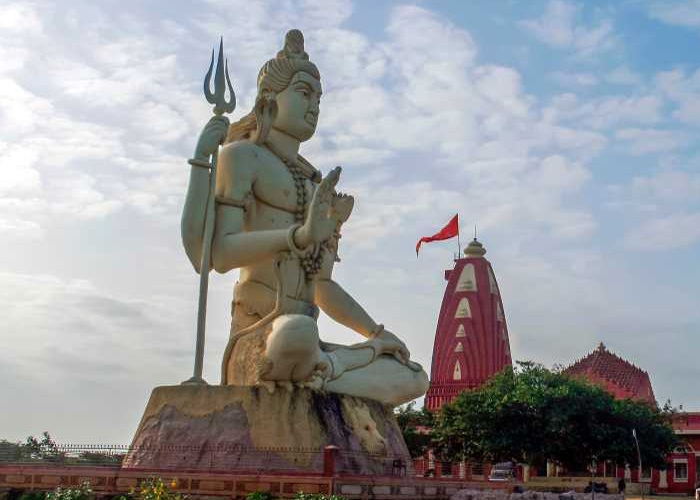
Frequently Asked Questions

What are the timings of Darshanam?
The Darshanam starts in the Morning from 6:00 AM Onwards.
Is there any dress code for Darshanam?
Yes. Every devotee who offers seva must wear Hindu Traditional Wear. (No modern clothes, sleeveless dress)
What is the price of Quick Darshanam?
The ticket for Quick Darshanam costs Rs. 150/-.
Share

Open Now

Friday 6 AM - 10 PM
Saturday 6 AM - 10 PM
Sunday 6 AM - 10 PM
Monday 6 AM - 10 PM
Tuesday 6 AM - 10 PM
Wednesday 6 AM - 10 PM
Thursday 6 AM - 10 PM
Address: Sri Bhramaramba Mallikarjuna Swamy Ammavarula Devasthanam, Srisailam, Andhra Pradesh, India
Phone: 8333901351Call Now
Website: https://www.srisailadevasthanam.org/en-in/ Visit the site
Follow Us:
Share
View Details

Open Now

Friday 6 AM - 10 PM
Saturday 6 AM - 10 PM
Sunday 6 AM - 10 PM
Monday 6 AM - 10 PM
Tuesday 6 AM - 10 PM
Wednesday 6 AM - 10 PM
Thursday 6 AM - 10 PM
Address: Sri Bhramaramba Mallikarjuna Swamy Ammavarula Devasthanam, Srisailam, Andhra Pradesh, India
Phone: 8333901351Call Now
Website: https://www.srisailadevasthanam.org/en-in/Visit the site
Follow Us:
Share

Somnath Jyotirling

The Somnath Jyotirling Temple, also called Somanatha temple or Deo Patan, is a Hindu temple located in Prabhas Patan, Veraval in Gujarat, India. Somnath Temple is the first of the 12 sacred Jyotirlingas which is dedicated to Lord Shiva. Somnath is a form of Lord Shiva that translates to “Lord of the Moon.”

The Somnath Jyotirling Temple is located in Prabhas Patan, close to Veraval Port in Saurashtra, Gujarat. It is also known as “The Eternal Shrine” because the temple has been looted and destroyed six times. However, it was magnificently rebuilt every time after that.

It is unknown when the first version of the Somnath temple was built, with estimates ranging from the early 1st millennium to around the 9th century CE. The temple was rebuilt several times in the past after being destroyed by multiple Muslim invaders and rulers, most notably an attack by Mahmud Ghazni in the 11th century.

Story Behind Somnath Jyotirling Temple

Ancient Indian traditions associate Somnath with the release of Chandra (Moon God) from the curse of his father-in-law Daksha Prajapati. According to legends, Moon was married to twenty-seven Daksha daughters. He did, however, prefer Rohini over the other queens. The Moon was cursed by the enraged Daksha, and it lost its ability to emit light. Moon went to the Prabhas Teerth on the advice of Prajapita Brahma and worshipped Bhagvan Shiva.

Somnath Jyotirling temple

Moon’s great penance and devotion pleased Bhagavan Shiva, who blessed him and freed him from the curse of darkness. According to Pauranic traditions, Moon built a golden temple, followed by Ravana’s silver temple, and Bhagvan Shree Krishna is said to have built Somnath temple out of Sandalwood.

History of Somnath Jyotirling Temple

According to legend, the moon god Somraj initially constructed a gold temple in Somnath; Ravana used silver, Krishna used wood, and Bhimdev used stone to rebuild this. Somnath’s first temple is thought to have been built 2,000 years ago. In 649 AD, King Maitre of Vallabhini built and renovated a second temple in its place. In 725, the old ruler of Sindh attacked and destroyed the temple with his army. Pratishtha King Nag Bhatt II used red stone (sandstone) to construct the temple for the third time in 815.

Somnath Jyotirling temple

In 1026, Mahmud Ghazni looted the valuable jewels and property of the Somnath temple. Following the looting, slaughtering, and burning of the temple, which resulted in its destruction, Solanki Raja Bhimdev, Parmar King of Malwa, built the fourth temple between 1026 and 1042. Somnath was destroyed when the Delhi Sultanate occupied Gujarat in 1299. It was destroyed yet again in 1394. In 1706 the Mughal emperor Aurangzeb destroyed the temple once more. The temple was not rebuilt again until 1950.

Somnath Jyotirling temple

Reconstruction – On November 13, 1947, India’s Iron Man and First Home Minister Sardar Vallabhbhai Patel promised to rebuild the temple. Today’s Somnath Temple is built on its original seventh-place location. When the temple was rebuilt on December 1, 1995, it was dedicated to the country by Indian President Dr. Shankar Dayal Sharma. When Dr. Rajendra Prasad proposed purifying Jyotirling in 1951, he said, “This temple of Somnath is a symbol of victory over construction on destruction.” The temple was built by the Shri Somnath Trust, which is now monitoring it.

Somnath Temple Somnath Jyotirling Temple

On November 13, 1947, India’s Iron Man and First Home Minister Sardar Vallabhbhai Patel promised to rebuild the temple. Today’s Somnath Temple is built on its original seventh-place location. When the temple was rebuilt on December 1, 1995, it was dedicated to the country by Indian President Dr. Shankar Dayal Sharma. When Dr. Rajendra Prasad proposed purifying Jyotirling in 1951, he said, “This temple of Somnath is a symbol of victory over construction on destruction.” The temple was built by the Shri Somnath Trust, which is now monitoring it.

Somnath Jyotirling temple

Interior – A Sabha Mandap, or assembly hall, a Nrityamandap, a Garbha Griha, and the Jyotirlingam are among the interior features of the temple. The ceiling is covered in beautiful watercolour paintings and is made of loadstone. There is a legend that the temple’s interior was once lavishly decorated with precious stones and jewels. However, in order to seize all of these glittering riches, invaders and attackers periodically attacked the temple.

Facts about Somnath Jyotirling Temple

  • The Somnath Jyotirling Temple is located in Prabhas Patan, Saurashtra, West Gujarat, India, at the Triveni Sangam, which is the confluence of the mythological Saraswati, Hiranya, and Kapila rivers.
  • The Somnath Jyotirling Temple was rebuilt several times in the past after being destroyed by multiple Muslim invaders and rulers, most notably an attack by Mahmud Ghazni in the 11th century.
  • After receiving Mahatma Gandhi’s approval for reconstruction, the modern Somnath temple was begun under the orders of India’s first Deputy Prime Minister, Vallabhbhai Patel.
  • Somnath Jyotirling Temple is first among the twelve Aadi Jyotirlingas of India. It is located at a strategic location on the western coast of India.
  • The blessings of Bhagvan Somnath are said to have freed the Moon God from the curse of his father-in-law Daksha Prajapati.
  • Visiting this ancient and divine site during Mahashivratri would be the ultimate treat for any devotee!
  • Devotees believe that a visit to this temple will wash away their sins.
  • Prabhasa Khanda, a chapter in the Skanda Purana, mentions this temple. The Rig Veda and the Bhagavat both mention it.
  • The temple is constructed in such a way that there is no land in a straight line to its south until Antarctica. Since 7 AD, this has been inscribed on one of the pillars. As a result, it is a sea-protected site.

Famous Festivals In Somnath Jyotirling Temple

  • Mahashivaratri: The Maha Shivaratri festival is a grand event at Somnath Jyotirling Temple, as it is at all important Shiva temples. It is the main festival in town. Every year, millions of devotees flock to this town to catch a glimpse of the Lord on this auspicious day, which falls in February/March.
  • Ganesh Chaturthi: Dedicated to Lord Ganesh, this festival is celebrated in August / September
  • Durga Puja. (Winter) – Devotees celebrate Navaratri at this temple in the month of Ashwin (Sep-Oct) as well as celebrate the triumph of the Goddess Durga over the buffalo demon (Mahishasura).
  • Navaratri. (Summer) – They celebrate other Navaratri in the fortnight of the Chaitra (March-April). Every nine days they worship Navadurga (nine Durgas).

How to Reach Somnath Jyotirling Temple

By Air: The Somnath Jyotirling Temple is About 130 km southeast of the Porbandar airport and about 85 km west of the Diu airport.

By Rail: It is about 7 Km southeast of the Veraval railway junction.

By Road: The city is well connected, you can reach there with cabs /taxis or buses. The quickest way to travel by road is via NH27 and NH47. The road trip from Ahmedabad to Somnath temple takes approximately 7 hours.

Also Read – Mallikarjuna Jyotirling

Read More

Support Us

If our content helps you even 1% in gaining information about the temple, please support us by contributing any amount, our UPI ID is - q417999792@ybl Or pay using QR CODE >>> Click Now

Location

Facilities

  • Drinking Water
  • Pooja Item Shops
  • Prasad Shops
  • Restaurants Nearby
  • Resting Room

Frequently Asked Questions

What is the Darshan Timing of the Temple ?
Darshan Timing is from 6:00 AM to 10:00 PM.
Aarti Timings : Morning = 7:00 AM, 12:00 Noon, 7:00 PM.
Light And Sound Show Timing = 8:00 PM To 9:00 PM.
(Except in the Monsoon / Rainy Season).
Is there any Special Facilities available for Physically Challenged and Senior Citizens?
Wheel Chairs / Golf Cart are available for physically challenged / Senior Citizens at the Main Gate of the Temple. And Lift Facility is available inside the Temple premise.
Can I carry my Mobile and other Gadgets along with me to the temple ?
All the Electronic/Electric Equipment, Gadgets are strictly prohibited (viz. Mobile, Camera, smartwatch, laptop, tablets, calculators etc etc.). All these can be stored in Lockers available in Cloak Room. The Cloak room facility is free of cost.
Is photography allowed?
Photography is strictly prohibited. You can Purchase High Resolution Photographs / Frames from Souvenier Counter.
Nearest Railway Station / Airport / Bus Stand ?
Somnath is Well Connected with Diu, Rajkot, Ahmedabad by Air / Train / Bus.
Nearest Airport : DIU – 85 Kms. ,
Rajkot – 200 Kms,
Ahmedabad – 390 Km.
Nearest Railway Station – Somnath – 0.5 Km, Veraval – 7 Km.
Share

Open Now

Friday 6 AM - 10 PM
Saturday 6 AM - 10 PM
Sunday 6 AM - 10 PM
Monday 6 AM - 10 PM
Tuesday 6 AM - 10 PM
Wednesday 6 AM - 10 PM
Thursday 6 AM - 10 PM
Address: Somnath Jyotirling Temple, Somnath Mandir Road, Somnath, Gujarat, India
Phone: +9194262 87659Call Now
Website: https://somnath.org/ Visit the site
Follow Us:
Share
View Details

Open Now

Friday 6 AM - 10 PM
Saturday 6 AM - 10 PM
Sunday 6 AM - 10 PM
Monday 6 AM - 10 PM
Tuesday 6 AM - 10 PM
Wednesday 6 AM - 10 PM
Thursday 6 AM - 10 PM
Address: Somnath Jyotirling Temple, Somnath Mandir Road, Somnath, Gujarat, India
Phone: +9194262 87659Call Now
Website: https://somnath.org/Visit the site
Follow Us:
Share

Kedarnath Jyotirling

Kedarnath Jyotirling Temple is a Hindu temple and one of Shiva’s twelve jyotirlingas, located on the Garhwal Himalayan range near the Mandakini river in the Indian state of Uttarakhand. Kedarnath temple is a sacred pilgrimage site in Northern India, located on the Mandakini River’s bank at an elevation of 3584 metres above sea level. The historical name of this region is “Kedar Khand”. Kedarnath temple is one of the 12 Jyotirlingas of Lord Shiva in India and is part of the Char Dhams and Panch Kedar in Uttarakhand.

The Kedarnath Jyotirling Temple is only open to the public between April (Akshaya Tritiya) and November (Kartik Purnima, the autumn full moon) due to severe weather. The temple’s vigraha, or deity, is brought to Ukhimath for six months of worship during the winter. It is believed that Kedarnath is the same form of Shiva, the “Lord of Kedarkhand,” the historical name of the area.

Story Behind Kedarnath Jyotirling Temple

The legend behind this well-known place of worship is that following the Mahabharata war, the Pandavas performed a penance to atone for their sins – killing their brothers. They were advised to seek Lord Shiva’s forgiveness in order to do so. They looked everywhere and finally found Lord Shiva at the location of the jyotirlinga in Kedarnath today.

Lord Shiva is said to have hidden himself from the Pandavas because he was unwilling to forgive them for their deception and sins during the war. He disguised himself as a bull and vanished into the earth.

Kedarnath Jyotirling Temple

Bhimasena, the second Pandava, tried to pull him out of the ground by pulling on his tail and hind legs. Lord Shiva, on the other hand, dug himself deeper and only reappeared in fragments in various locations: the hump in Kedarnath, the arms in Tunganath, the navel and stomach in Madhyamaheshwar, the face in Rudranath, and the hair and head in Kalpeshwar.

The Pandavas erected temples to Shiva in these five locations, known as the Panch Kedars. This cleansed them of their sins. Lord Shiva also promised to remain in the sacred location as a triangular jyotirlinga. This is why Kedarnath is so well-known and revered among devotees.

Kedarnath Jyotirling Temple History

According to Hindu tradition, Lord Shiva manifested himself in the form of Jyotirlingam, or cosmic light. There are 12 such Jyotirlingas, with Kedarnath being the highest. This magnificent temple was built over a thousand years ago by Jagad Guru Adi Shankaracharya. It is situated in Uttarakhand’s Rudra Himalaya range. It is located at an elevation of 3,581 metres and is a 16-kilometer trek from the nearest town of Gaurikund.

The Kedarnath temple is made of massive stone slabs that are laid out over a large rectangular platform. The temple is reached via large grey Steps that lead to the Holy Sanctums. On the steps, we can see inscriptions in Pali.

Kedarnath Jyotirling Temple

The Kedarnath Teerth Purohits are the region’s ancient Brahmins; their ancestors (Rishi-Muni) have worshipped the lingam since the time of Nara-Narayana and Daksh Prajapati. King Janmejay, the Pandavas’ grandson, granted them the right to worship at this temple and donated the entire Kedar region, and pilgrims have been worshipping there ever since.

The Kedarnath Temple is said to have been built by the Pandavas, and Adi Shankara redesigned it in 8 AD. In essence, the magnificent Kedarnath Temple has stood the test of time for more than a thousand years. Geologists assert that during the Little Ice Age, Kedarnath Temple was covered in snow for 400 years. The Little Ice Age is the period between 1300 and 1900 AD.

Kedarnath Jyotirling Temple

On June 16 and 17, 2013, the Kedarnath valley, along with other parts of Uttarakhand, experienced unprecedented flash floods. The surrounding areas were severely damaged, but the temple structure was surprisingly protected by a large rock which is now called as Bhima Rock that appeared before the temple and protected during the floods. Later, inspection and analysis by investigating teams revealed that the temple structure was unharmed, despite the need for clean-up, repair, and reconstruction of the surrounding areas. Devotees consider Lord Shiva’s grace to be the strength of the ancient temple of Kedarnath.

Architecture of Kedarnath Jyotirling Temple

The presiding image of Kedarnath, in the form of a lingam, has an irregular shape and a pedestal that measures 3.6 m (12 ft) in circumference and 3.6 m (12 ft) in height. In front of the temple is a small pillared hall with images of Parvati and the five Pandava princes.
The first hall inside Kedarnath Temple houses statues of the five Pandava brothers, Krishna, Nandi, Shiva’s vehicle, and Virabhadra, one of Shiva’s guards. The main hall also contains statues of Draupadi and other deities. The head of a man carved in the triangular stone lingam is an unusual feature of the temple.

Kedarnath Jyotirling Temple

A similar head can be found carved in another temple nearby, which was built on the site of Shiva and Parvati’s marriage. Adi Shankara is credited with reviving this temple, as well as Badrinath and other Uttarakhand temples; he is said to have attained Mahasamadhi at Kedarnath. Adi Sankara’s samdhi mandir is located behind the temple.

Facts about Kedarnath Jyotirling Temple

  • Kedarnath Dham Jyotirling is among the famous pilgrimage sites for Lord Shiva devotees.
  • Kedarnath, located on the Mandakini River’s banks, attracts millions of pilgrims each year.
  • A similar head can be found carved in another temple nearby, which was built on the site of Shiva and Parvati’s marriage.
  • Adi Shankara is credited with reviving this temple, as well as Badrinath and other Uttarakhand temples; he is said to have attained Mahasamadhi at Kedarnath. Adi Sankara’s samdhi mandir is located behind the temple.
  • The temple is inaccessible by road and must be reached via a 22-kilometer (14-mile) uphill trek from Gaurikund. Kedarnath Temple could be reached via an 18 km trek from Gaurikund or by Helicopter from Phata.
  • The temple can be reached by pony, mule, or manchan.
  • According to Hindu legends, the Pandavas built the temple, which is one of the twelve Jyotirlingas, or Shiva’s holiest Hindu shrines.
  • The temple is the first of the Panch Kedar pilgrimage sites and one of the four major sites in India’s Chota Char Dham pilgrimage of the Northern Himalayas.
  • The word Kedarnath signifies “the god of the Kedar,” derived from the Sanskrit words kedara (“field”) and natha (“lord”).
  • According to the Kashi Kedara Mahatmya text, the name “Kedarnathis” comes from the fact that “the crop of liberation” grows there.

Famous Festivals In Kedarnath Jyotirling Temple

  • Badri-Kedar Utsav – This festival is celebrated in the month of June with great joy when Phatak of the temple is opened after six months of closure.
  • Shravani Annakoot Mela – This festival is celebrated on the day before Raksha Bandhan.
  • Samadhi Pooja – On this day when the Kedarnath Temple closes for six months
  • Mahashivratri –The Maha Shivaratri festival is a grand event at Kedarnath Jyotirling temple, as it is at all important Shiva temples. It is the main festival in town. Every year, millions of devotees flock to this town to catch a glimpse of the Lord on this auspicious day, which falls in February/March

How to Reach Kedarnath Jyotirling Temple

The best time to visit the Kedarnath Jyotirling Temple is from April/May to June and September to October/November.

By Air: Jollygrant Airport is the closest airport to Kedarnath Jyotirling Temple

By Rail: The nearest railway station to Kedarnath Jyotirling Temple is Rishikesh.

By Road: Gaurikund is connected by motorable roads, and buses and taxis from important destinations like Rishikesh, Dehradun, Uttarkashi and Tehri, Pauri and Chamoli are easily available. You can reach Kedarnath Jyotirling Temple by choosing any of the options.

Also Read –  Somnath Jyotirling


Read More

Support Us

If our content helps you even 1% in gaining information about the temple, please support us by contributing any amount, our UPI ID is - q417999792@ybl Or pay using QR CODE >>> Click Now

Location

Facilities

  • Drinking Water
  • Pooja Item Shops
  • Prasad Shops
  • Resting Room

Frequently Asked Questions

What is Best time to visit Kedarnath
In The month of April, May, Jun, Jul, Aug, Sep, Oct, Nov
Can I offer flowers in Kedarnath Temple?
Yes, you can offer flowers in Kedarnath Temple.
Can I complete Kedarnath Darshan by Helicopter in one day?
Yes, you can complete Kedarnath Darshan by Helicopter in one day.
How much time does it take to reach Kedarnath from Gaurikund?
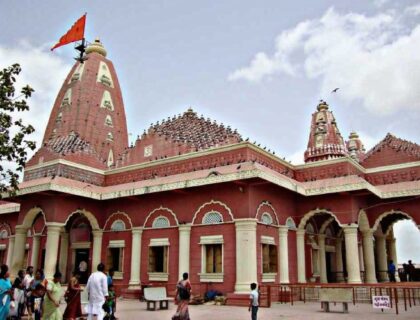
From Gaurikund it takes around 7-8 hours to reach Kedarnath.
Is Doli or Horse-Riding Facility available in Kedarnath?
Yes, pilgrims can enjoy the facility of a Doli or Horse riding facility in Kedarnath.
Share

Open Now

Friday 4 AM - 10 PM
Saturday 4 AM - 10 PM
Sunday 4 AM - 10 PM
Monday 4 AM - 10 PM
Tuesday 4 AM - 10 PM
Wednesday 4 AM - 10 PM
Thursday 4 AM - 10 PM
Address: Kedarnath Temple, Kedarnath, Uttarakhand, India
Phone: +917302257116Call Now
Website: https://badrinath-kedarnath.gov.in/ Visit the site
Follow Us:
Share
View Details

Open Now

Friday 4 AM - 10 PM
Saturday 4 AM - 10 PM
Sunday 4 AM - 10 PM
Monday 4 AM - 10 PM
Tuesday 4 AM - 10 PM
Wednesday 4 AM - 10 PM
Thursday 4 AM - 10 PM
Address: Kedarnath Temple, Kedarnath, Uttarakhand, India
Phone: +917302257116Call Now
Website: https://badrinath-kedarnath.gov.in/Visit the site
Follow Us:
error: Content is protected !!